Imagine walking into a grand banquet in an ancient villa. The music is loud, the wine flows freely, and the guests laugh and dance. As you join the celebration and look at your feet, you realize you are stepping directly onto the face of a terrifying monster and a famously tipsy mythical hero. For the wealthy Romans who hosted these elaborate gatherings, placing powerful deities and fearsome beasts on the floor was no mistake. It was an intentional display of power, philosophy, and magical protection.
To understand this strange ancient design choice, we must travel to the sunbaked plains of southern Portugal. In the modern day Alentejo region, beneath the busy streets of Beja, lie the buried ruins of Pax Iulia. During the absolute height of Roman rule, this area was part of the province of Lusitania, which marked the far western edge of the empire. Here, wealthy landowners built massive villas designed to impress visitors and demonstrate their connection to the wider Mediterranean world. The dining rooms of these luxurious homes were not just places to eat. They were grand stages for social performance.
But why would an elite Roman family decorate their dining room floor with a hero who has had too much to drink, or a monster known for turning men to stone? A recent investigation into two extraordinary mosaic fragments preserved in regional Portuguese museums has provided fascinating answers. These ancient artworks reveal that a Roman floor was a complex language of symbols speaking directly to the guests who walked upon it.
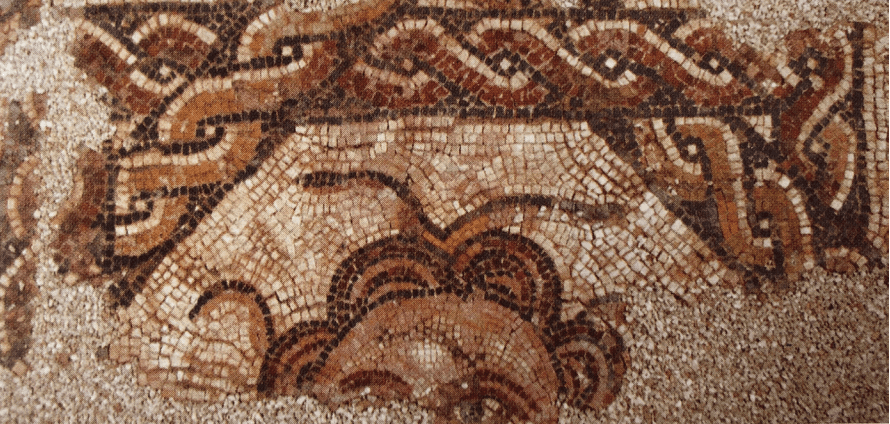
The first mosaic fragment offers a highly unusual portrayal of the legendary hero Hercules. In standard ancient art, Hercules is usually shown as an imposing figure of ultimate strength, fresh off a victory and radiating power. However, this particular floor tells a very different story. The mosaic shows Hercules looking noticeably unsteady on his feet. He leans forward heavily, with one leg bent as if he is struggling to keep his balance. Draped over his shoulders is the thick skin of the mythical lion he famously defeated in his very first legendary labor.
Despite his heroic garments, this is quite clearly a depiction of a drunken Hercules. This playful and slightly embarrassing theme is occasionally found in Roman art scattered across Spain, France, and North Africa. Finding such an image in Portugal, however, is considered extraordinarily rare by archaeologists. At first glance, putting a drunk demigod on the floor where party guests would spill wine seems like a terrible insult to a revered mythological figure. But the ancient Roman mindset viewed this imagery through a very specific philosophical lens.
The drunken Hercules was an artistic representation of a core Roman concept called virtus. Virtus translates loosely to the idea of true moral strength and character. The Romans believed that true strength was not about being perfect all the time. Instead, virtus was demonstrated precisely through the act of overcoming ordinary human weakness. By showing Hercules in a vulnerable and intoxicated state, the homeowner made a sophisticated philosophical statement. The artwork suggested that even the greatest of heroes struggles with earthly temptations, but his ultimate ability to overcome those weaknesses makes him truly legendary. It was a clever conversation starter for educated guests enjoying their wine.
The second mosaic fragment studied by researchers comes from an ancient estate known as the Villa of Monte do Meio. This piece features the unmistakable face of Medusa staring up from the ground. Her crown of writhing snakes is perfectly intact, and her piercing eyes seem to follow the viewer. In Greek and Roman mythology, Medusa was a terrifying Gorgon whose mere gaze could turn a living person into solid rock. Placing her face at the exact center of a busy dining room floor might seem like a sure way to ruin a festive mood.
Yet, in the context of Roman domestic architecture, Medusa was not placed there to threaten the household or frighten the invited guests. Her presence served a deeply protective purpose. The Romans lived in a world where belief in malicious spirits was very real. They believed that placing a frightening and powerful image at boundaries and central gathering places would actively ward off bad luck and deflect negative energy. Medusa acted as a magical shield, fiercely protecting the home and wrapping a cloak of supernatural safety over everyone who feasted under her watchful gaze.
Together, these beautiful fragments from the edge of the empire show us that ancient Roman elites were deeply connected to a shared visual culture regardless of how far they lived from the capital city. They transformed the very ground they walked on into bold declarations of their worldly knowledge, their philosophical learning, and their desire for divine protection. Today, we tend to hang our finest art safely on walls where it cannot be touched. The Romans preferred to embed their stories directly beneath their feet, weaving myth and magic into the physical foundation of their daily lives.
According to research documented in the Journal of Mosaic Research and detailed in a recent Arkeonews article, these Portuguese artifacts continue to teach us about ancient domestic life. These colorful stones remind us that a home has always been more than just a place to sleep. It is a sanctuary where we gather, celebrate, and seek shelter from the unpredictable forces of the outside world.