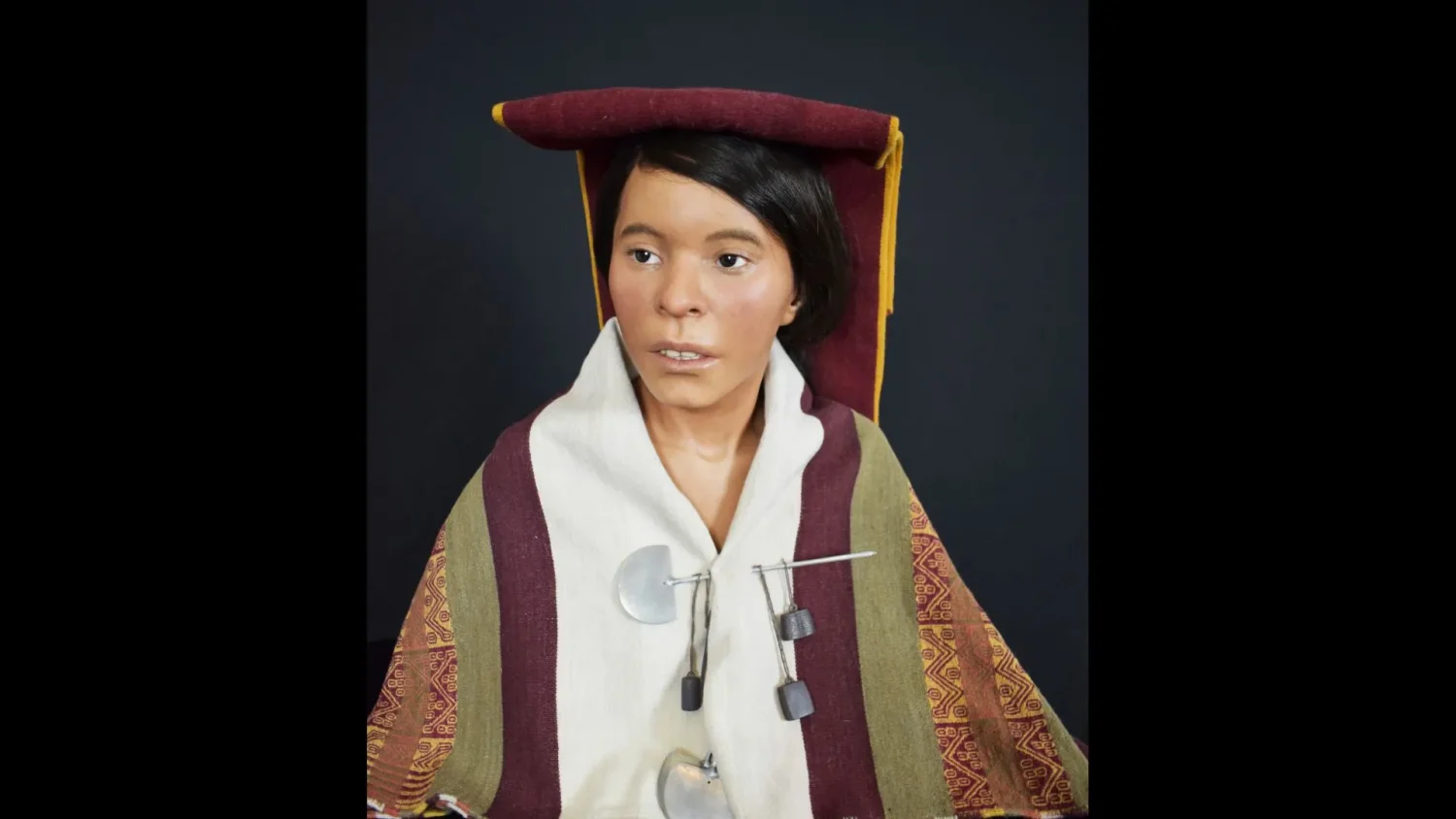
High in the freezing peaks of the Andes Mountains lie the silent witnesses of a fallen empire. For centuries, the wind has howled over snowcapped summits where the Inca people once walked to commune with their gods. Among these treacherous heights, archaeologists have discovered bundles that look remarkably like sleeping children. These are the victims of the Capacocha ritual, a solemn ceremony that involved the sacrifice of the most perfect children in the empire. For a long time, the exact details of their final moments remained a mystery, obscured by the passage of five hundred years and the delicate nature of their preservation. However, modern science has found a way to peer through the wrappings without disturbing the dead.
Traditionally, examining a mummy meant unwrapping it, a destructive process that could damage the fragile tissues and textiles forever. This limitation left many questions unanswered regarding how these children died and what they experienced in their last hours. Did they suffer? Were they aware of their fate? Today, researchers have turned to computed tomography, commonly known as CT scans, to solve these riddles. By virtually slicing through the layers of wool, skin, and bone, scientists can now reconstruct the biological reality of the past with startling clarity. This non invasive approach allows us to see inside the bodies of these ancient messengers while leaving them entirely intact.
What the scans reveal is a poignant snapshot of the past frozen in time. The images show well preserved internal organs, including the brain, heart, and lungs, which appear almost as they would in a living person. This exceptional preservation is due to the freezing temperatures and the dry mountain air that naturally mummified the bodies. Yet it is the details within the stomach and the condition of the bones that tell the true story of their final moments. The scans suggest that these children did not die from brutal physical violence in the moments leading up to their death. Instead, the evidence points to a much quieter and perhaps more sorrowful end.
By analyzing the contents of the stomach and the chemical composition of hair samples, researchers have pieced together a timeline of the weeks and hours before death. The data indicates that the children were given escalating doses of coca leaves and alcohol, likely in the form of chicha, a fermented corn beer. The CT scans often reveal food in the stomach that was barely digested, implying that they were fed a final meal not long before they passed away. This combination of heavy sedation and a full stomach suggests the priests aimed to keep the children in a state of calmness or unconsciousness. The biting cold of the high altitude would have done the rest, allowing them to drift into a deep sleep from which they never woke.
This scientific insight transforms our understanding of the Capacocha ritual. It was not merely an act of slaughter but a highly orchestrated liturgical event. The Inca believed that these children were not dying but were traveling to live with the ancestors and watch over the people. They served as messengers to the Apus, the mountain spirits who controlled the weather and water. To the Inca mind, sending a frightened or crying child to the gods would have been disrespectful. The sedatives ensured that the messenger arrived in the other world in a state of peace and purity.
The scans also highlight the incredible physical journey these young ones undertook. Some bodies show signs of previous infections or minor injuries that had healed, painting a picture of their life before the sacrifice. They were often peasants who were elevated to a divine status, treated with reverence, and fed the best diet in the months leading up to the pilgrimage. The arduous climb to the summit, often exceeding six thousand meters, was a physical feat in itself. The scans show the development of their bones and muscles, proving they were healthy and strong before their final ascent.
In some rare instances, the technology has revealed fractures or blows to the head, suggesting that not every sacrifice ended solely by exposure to the cold. However, the prevailing narrative that emerges from these high tech investigations is one of ritualized sedation. The use of medical imaging bridges the gap between the archaeological record and the human experience. We are no longer looking at artifacts but at individuals who breathed, ate, and slept. We can almost imagine the heavy silence of the mountain, the smell of burning incense, and the numbing effect of the coca leaves as the child sat down in the snow, waiting for the end.
These findings remind us of the complexity of ancient cultures. It is easy to judge the past through the lens of the present, seeing only the cruelty of the act. Yet the care taken to drug the children and the elaborate grave goods buried with them speak of a society doing what it believed was necessary to maintain cosmic order. The children were the most precious offering they could give. Thanks to modern technology, their stories are being told with a level of intimacy that was previously impossible.
According to a report by Live Science detailing these recent findings, the use of CT scans continues to revolutionize our understanding of Inca human sacrifice, proving that even after five centuries, these silent messengers still have much to tell us.