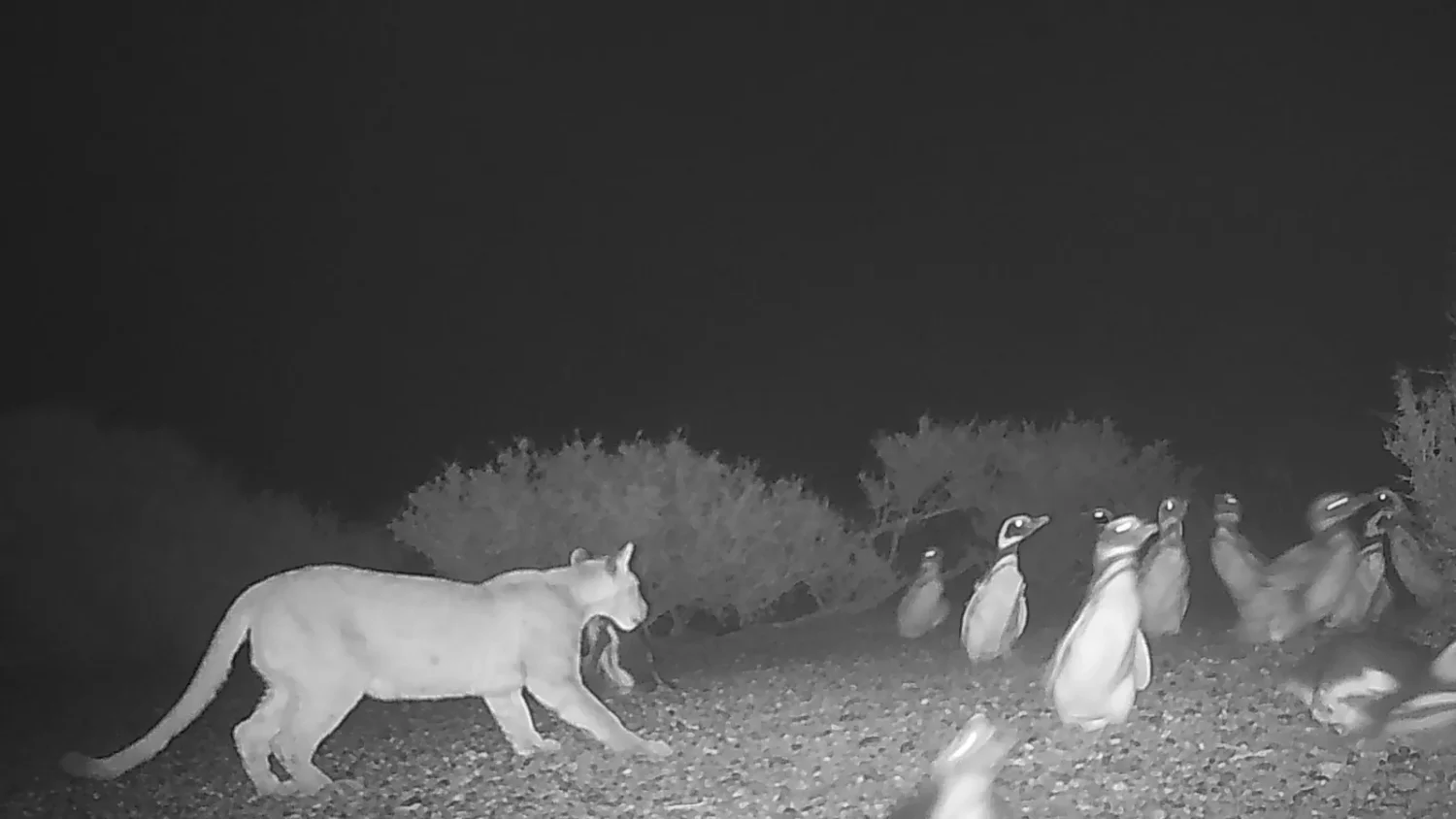
Imagine a ghost of the Patagonian plains, a creature built for solitude. The puma, a powerful and elusive predator, has forever roamed these vast, windswept landscapes alone. They are masters of the silent hunt, their territories carefully marked and fiercely defended against rivals. For one puma to tolerate another in its space is unusual. To see them gathering is almost unheard of. Yet, along a remote stretch of Argentine coastline, something is drawing these lone hunters together, compelling them to rewrite the ancient rules of their own existence. A powerful force has emerged, one that is changing not just where they hunt, but how they live. The source of this radical shift is not a new threat or a mysterious call, but the sound of a bustling city of seabirds. Along a two kilometer stretch of beach within Monte León National Park, a colossal colony of around 40,000 pairs of Magellanic penguins has established its breeding grounds. Every year, from September to March, these flightless birds create a dense, noisy, and irresistible buffet. For the pumas returning to the region, this discovery was a revelation. It offered a food source so abundant and so easily accessible that it began to warp the very fabric of their solitary nature. This extraordinary natural drama has its roots in human history. Throughout the 20th century, sheep ranchers relentlessly hunted pumas to protect their livestock, nearly erasing them from the Patagonian landscape. With their primary predator gone, other species began to change their habits. The Magellanic penguins, feeling secure, established this massive mainland breeding colony. The creation of Monte León National Park in 2004 provided a sanctuary, allowing nature to reclaim its balance. The pumas, a resilient species, slowly began to return to their ancestral lands. But the land they returned to was not the one they had left. It now held a new, concentrated prize that no puma had ever encountered in this way before. To understand this emerging phenomenon, researchers embarked on a detailed study. They fitted fourteen pumas with GPS collars to track their every move and set up camera traps to observe their behavior discreetly. The data they collected was astonishing. Nine of the collared pumas had become dedicated penguin hunters. Their entire existence started to revolve around the seabirds’ schedule. During the breeding season, these pumas stayed remarkably close to the coast, their hunting grounds shrinking to the immediate vicinity of the penguin colony. But once the penguins migrated offshore in March, the pumas’ territories expanded dramatically, sometimes more than doubling in size as they roamed far and wide in search of other food. Yet, the most profound discovery was not in their movement, but in their interactions. How could these fiercely independent animals suddenly stand to be so near one another? The answer lay in the sheer abundance of food. With tens of thousands of penguins available, the primary reason for competition and territorial aggression simply vanished. There was more than enough for everyone. The data from the tracking devices painted a vivid picture of this new social dynamic. Researchers recorded 254 encounters between the penguin eating pumas, most of them peaceful and within just one kilometer of the colony. In stark contrast, they observed only four encounters between the pumas that stuck to traditional prey in the interior. The density of pumas near the coast doubled the highest concentration ever previously recorded in Argentina. This behavior is not entirely without precedent in the animal kingdom. It mirrors the way grizzly bears, also typically solitary, congregate along rivers in Alaska during salmon runs. When a food source is so plentiful and predictable, the benefits of sharing outweigh the costs of fighting. This “natural experiment” in Monte León National Park is a powerful illustration of how ecosystems can be reshaped by the return of a key species. It reveals the incredible adaptability of wildlife, showing that behaviors we consider fixed can be surprisingly fluid. The reintroduction of pumas has created a novel interaction that is reshaping the local food web. Interestingly, despite the constant predation, the penguin population remains stable, suggesting a new, sustainable balance is being struck between predator and prey. This fascinating story of change, documented in a study reported by Live Science, is more than just a scientific curiosity. It is a reminder that the wild is not a static picture but a living, breathing story, constantly unfolding in unexpected and remarkable ways. On the coast of Patagonia, the unlikely meeting of puma and penguin has opened a brand new chapter, and we are only just beginning to read it.
How a Penguin Buffet is Rewriting the Social Rules for Patagonia’s Pumas