
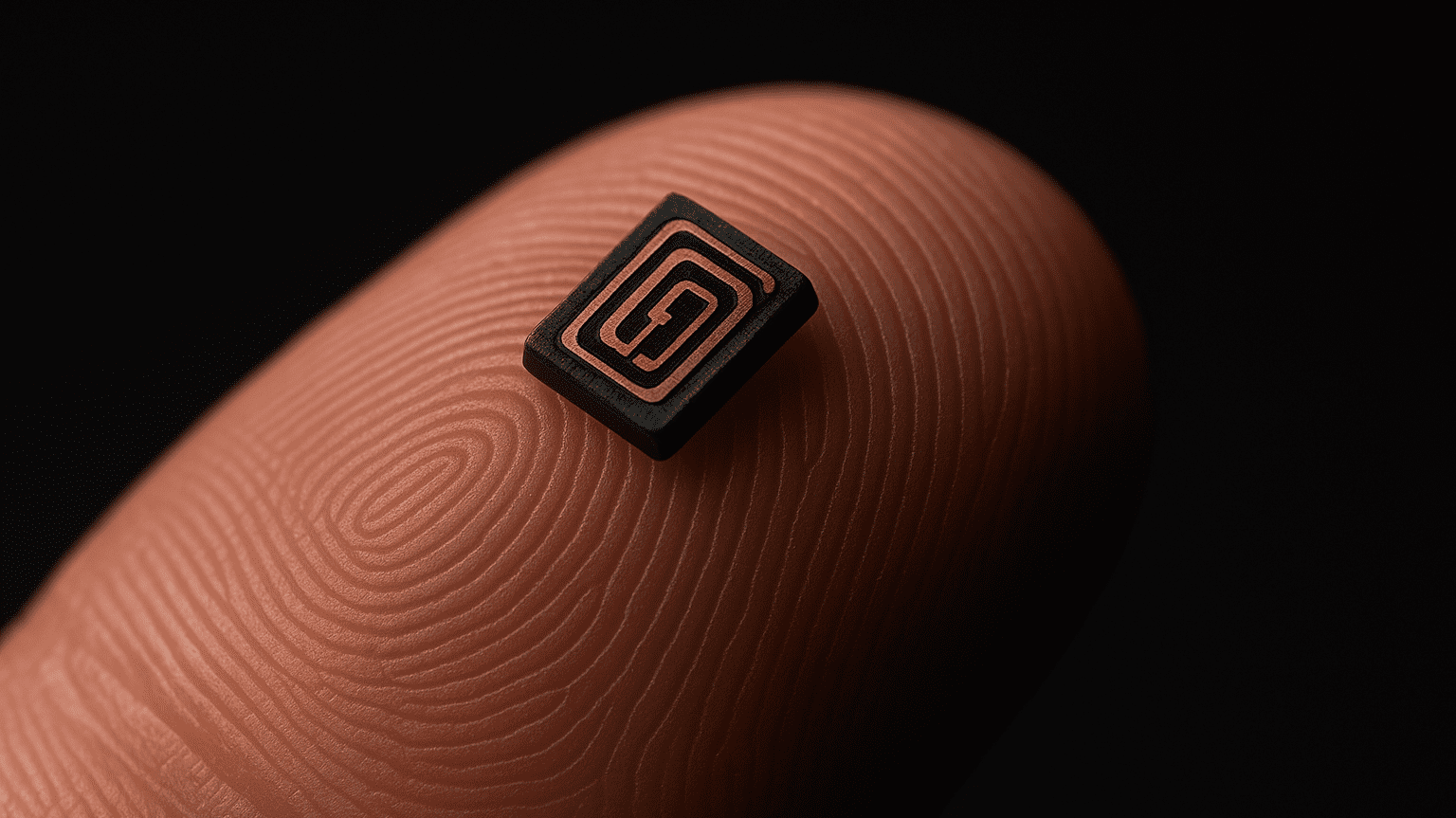
In a white room humming with precision instruments, a scientist holds a syringe that looks no different from any used in a doctor’s office. But inside this one lies not medicine, not a drop of liquid, but a device smaller than a grain of rice. As the syringe presses gently against the skin, the tiny fragment disappears into the body. A moment later, deep within the tissue, invisible energy awakens. There are no wires. There are no batteries. Only a spark born from a field of magnetism, quietly giving life to something that could transform medicine forever.
This is the vision behind a groundbreaking study from the Massachusetts Institute of Technology, where engineers have created an injectable micro-antenna capable of wirelessly powering implants deep inside the human body. Unlike traditional medical devices that depend on bulky batteries or surgical leads, this new system draws power from outside the body using magnetic energy. It does not need to be replaced. It does not require major surgery. It simply exists inside you, doing its work silently.
The technology that makes this possible rests on a principle that sounds almost like alchemy but is grounded in physics. The team designed a structure made of two ultrathin materials layered together. One reacts to magnetic fields by slightly changing shape. The other converts that movement into electricity. When an external magnetic field is applied, these layers work in harmony. The first flexes, the second translates that vibration into electrical current. The result is a miniature device that can turn magnetism into energy with remarkable efficiency, all without heating or damaging surrounding tissue.
The antenna is so small that it can fit through a standard syringe needle. Once inside the body, it can rest anywhere from just beneath the skin to several centimeters deep, depending on where the implant is needed. Outside, a small wearable patch generates the magnetic field required to power it. The magnetic field travels through the body harmlessly, reaching the buried antenna, which converts it into usable electricity. The entire process happens in silence, without any sensation to the patient.
The potential uses for this innovation stretch far beyond imagination. It could power heart implants that monitor and stabilize rhythm without ever needing a battery replacement. It could keep deep-brain stimulators running to help patients with Parkinson’s disease, depression, or chronic pain. It could energize sensors that track blood sugar or hormone levels continuously, hidden beneath the skin, providing data in real time. It could even supply electricity to future prosthetics that respond directly to neural signals, making movement feel natural again.
For doctors, the implications are equally powerful. Current implant surgeries are complex and often require future operations just to replace power sources. With an injectable system, an entire procedure could take minutes instead of hours. The recovery time could shrink from weeks to a single day. And because there are no internal batteries, the risk of infection, leakage, or device failure drops dramatically.
The engineers at MIT tested their system using low-frequency magnetic fields that travel through human tissue with almost no energy loss. This makes the technology safer and more efficient than earlier wireless power systems that used high frequencies and sometimes heated surrounding tissue. In their experiments, the team demonstrated that their design produces thousands of times more power than metallic coil antennas of similar size. It is efficient enough to power small sensors or transmitters entirely through magnetic coupling, opening the door for a new class of biomedical devices that live completely untethered.
Imagine the world this could create. A person with a chronic heart condition could receive a tiny implant that monitors their heartbeat continuously, transmitting data directly to their doctor without the need for external wires or frequent hospital visits. A diabetic could have a glucose sensor quietly operating under their skin, powered by a small wearable patch rather than a bulky device. Even in brain research, where electrodes must be placed deep within tissue, these antennas could power entire networks of implants to record and stimulate neural activity with unprecedented precision.
Yet as with every great innovation, the story is still unfolding. Before this technology can reach patients, researchers must ensure that it is safe for long-term use. The materials must remain stable inside the body for years without triggering immune reactions. The magnetic field must be strong enough to power devices in motion but gentle enough not to disturb delicate tissues. And there are deeper questions that extend beyond biology. When our bodies host networks of silent electronics, who will control the data they collect? How will we protect the boundary between human and machine when the two begin to merge so seamlessly?
These questions linger like an unfinished thought, a quiet pulse of curiosity waiting for the next discovery. The researchers are already exploring ways to integrate data transmission into the same structure, allowing the antenna not just to receive energy but also to send information outward. In the future, such implants could form a living network of bio-connected devices—tiny messengers relaying signals across the body and beyond.
In a way, this tiny antenna does more than power machines. It challenges how we define life and technology. It makes the human body an active part of an electrical circuit, merging the organic and the engineered into something new. It promises a medical future that is less invasive, more intelligent, and infinitely more personal.
A device smaller than a grain of rice could one day power your body from within. And perhaps, in that quiet spark beneath the skin, lies the beginning of a world where healing no longer depends on what we carry outside, but on what we awaken inside.
Source: Injectable antenna could safely power deep-tissue medical implants

