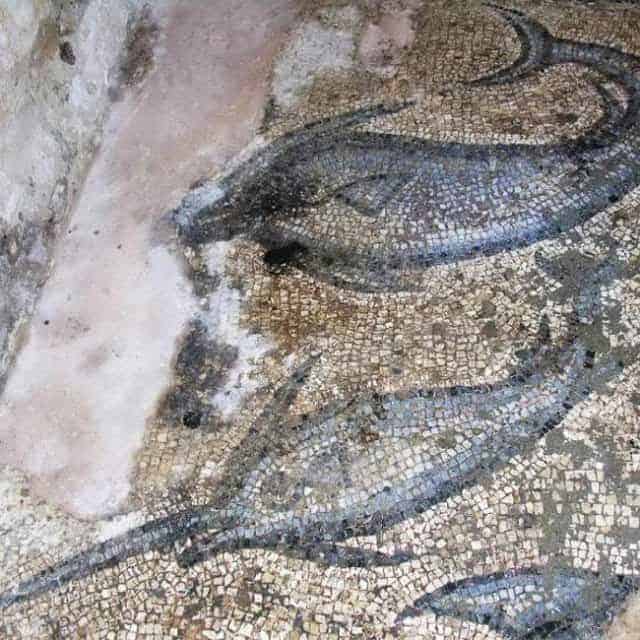
In the bustling coastal city of Bodrum, Turkey, a place where the Aegean Sea laps against shores steeped in millennia of history, the hum of modern life often builds upon layers of the past. It was here, in 2018, that a routine property development came to an abrupt and unexpected halt. As construction workers cleared the ground for a new building, their machinery uncovered not just soil and rock, but the unmistakable signs of something ancient and extraordinary lying just beneath the surface. What they had stumbled upon was not just another relic of a bygone era, but a story that would challenge our very understanding of wealth and status in the ancient Roman world. Archaeologists were called to the site, and as they carefully began to excavate, a magnificent residence started to emerge from its earthly tomb. They found the foundations of a sprawling luxury villa, complete with the remains of a private Roman bath and elegant marble work, clear indicators of a very wealthy owner. Among the debris, they cataloged pottery, delicate perfume bottles, and even a collection of ten tombs containing human remains. But the true treasure was revealed on the floors. A series of breathtaking mosaics, crafted with exquisite skill and artistry, spread across the villa’s rooms. These were not scenes of gods or emperors, nor of epic battles. Instead, they depicted the vibrant life of the sea, with detailed images of fishermen casting their nets and giant, powerful fish swimming through azure waters. The craftsmanship was a testament to immense riches, but the subject matter was a puzzle. Who would commission such a grand residence only to decorate it with scenes of maritime labor? The answer lay in a name that had been known, but not fully understood, for over a century. Inscriptions found within the villa and on earlier discoveries dating back to the 1890s pointed to one man: Phainos. And Phainos was not a senator, a general, or a shipping magnate in the way we might imagine. He was, by trade, a fisherman. The discovery of his opulent home, dating to the 2nd century AD, provides a stunning glimpse into a world where a fisherman could be one of the richest people in a city. This city was no ordinary provincial town. It was Halicarnassus, a name that echoed through antiquity as the home of the Mausoleum, the grand tomb of Mausolus, which was so magnificent it was counted as one of the Seven Wonders of the Ancient World. For a fisherman to build such a palace in a city of this stature speaks volumes about his success. The question, then, is how could fishing lead to such fabulous wealth? Research into the economy and tastes of the period reveals the answer. The ancient Greeks and Romans were true gourmands of the sea. Elite diners particularly craved large, fresh fish like tuna and eel, and were willing to pay enormous sums for them. The Aegean was rich with these prized species, and a skilled fisherman like Phainos could build a fortune catering to this demand. But the real economic powerhouse was the trade in processed fish. Salted and preserved tuna and anchovies were staple foods for all social classes, from legionaries on the frontier to the urban populace of Rome itself. This industry was a cornerstone of Mediterranean commerce, and a man who could master its supply chain could generate wealth on a scale we now see was possible. Phainos was clearly a master of his craft, a maritime entrepreneur who turned the bounty of the sea into a terrestrial fortune. His villa was not just a home, it was a proud declaration of his identity, with the mosaic floors serving as a permanent celebration of the source of his prosperity. This accidental discovery beneath a modern construction site reminds us that history is never a closed book. It shows that our assumptions about the past, about who held power and wealth, can be overturned by a single, remarkable find. The story of Phainos, the fisherman who lived like a king, is a powerful testament to a vibrant and complex ancient world, where fortune could be found in the most unexpected of places. According to reporting from the Greek Reporter, the excavation of this 1800 year old villa continues to shed light on the prosperous life of one of antiquity’s most successful fishermen. His legacy, once buried under the earth, now offers a profound connection to the enduring relationship between humanity and the sea, a story of how the deep blue could build a palace of stone and tile.
Mosaics of the Sea: The Surprisingly Rich Fisherman of Ancient Halicarnassus