
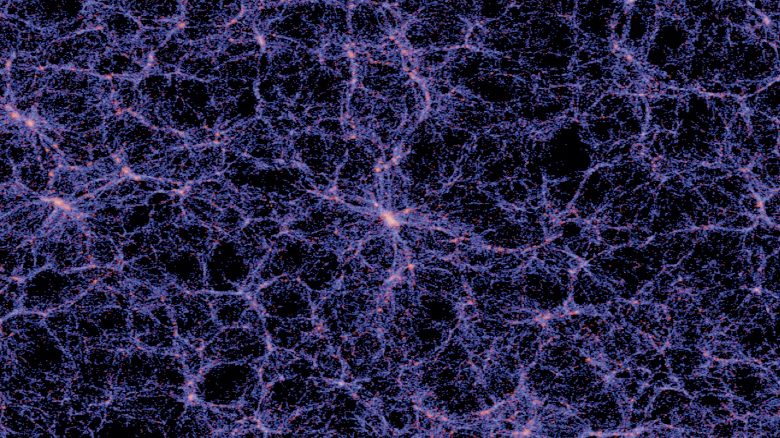
creating the largest and most detailed 3D map of the universe ever made.
This groundbreaking achievement wasn’t just a technical triumph—it reshaped how we view the cosmos. By observing over 50 million galaxies and quasars,
DESI illuminated the intricate structure of the universe, showing how galaxies are distributed across space and time. More importantly, 2024 marked the year
DESI provided critical insights into the mysterious force known as dark energy, paving the way for new understandings of the universe’s past and future.
Breaking Records: DESI’s 2024 Milestone
In 2024, DESI officially completed the largest 3D map of the universe ever constructed, surpassing all previous astronomical surveys. This feat involved cataloging
the positions and movements of over 50 million celestial objects, including galaxies, quasars, and other distant structures.
By observing the light from these objects, DESI mapped their positions in three dimensions, revealing not just where galaxies are but how they are connected.
The result was a “cosmic web,” a vast network of interconnected filaments and clusters that stretch across billions of light-years. This web, shaped by gravity and dark matter,
provides the framework on which galaxies form and evolve.
The scale of this map is difficult to fathom—it’s as if DESI provided us with a time machine, allowing scientists to glimpse the universe as it existed billions of years ago.
By studying light that has traveled for billions of years, DESI offered humanity a window into the universe’s history, from its earliest moments to its current state.
What makes this achievement truly groundbreaking, however, is DESI’s contribution to understanding the universe’s most mysterious force: dark energy.
Dark Energy Breakthroughs in 2024
Dark energy is one of the greatest enigmas in modern science. Discovered in the late 1990s, it’s the force responsible for accelerating the universe’s expansion. Despite its dominance—it accounts
for 68% of the universe’s total energy—dark energy remains poorly understood.
In 2024, DESI made significant strides in unraveling this mystery. By analyzing the distribution of galaxies and measuring the rate of cosmic expansion over billions of years, DESI revealed new insights into
how dark energy behaves. One of the most exciting findings was evidence suggesting that dark energy might not be constant, as previously believed. Instead, it may evolve over time, subtly changing the rate at
which the universe expands.
This discovery challenges existing models of the universe, including Einstein’s idea of a cosmological constant—a fixed value that describes the effect of dark energy. If dark energy is indeed dynamic, it opens up
new possibilities for understanding the universe’s fate. Will the cosmos continue expanding forever, or could it eventually slow and contract? DESI’s data provides a foundation for answering these profound questions.
Expanding Horizons: Cross-Disciplinary Impacts
DESI’s 2024 findings didn’t just advance our understanding of dark energy—they also influenced other fields of science, including gravity, particle physics, and quantum mechanics.
One of the key contributions was DESI’s role in testing Einstein’s General Theory of Relativity on a cosmic scale. Einstein’s theory has been the cornerstone of our understanding of gravity for over a century,
but DESI’s precise measurements of galaxy clustering and motion have pushed it to its limits. These observations confirmed Einstein’s predictions in many cases but also raised questions about potential discrepancies
in certain regions of the universe.
Additionally, DESI’s data has provided critical insights into dark matter, the invisible substance that makes up 27% of the universe. By studying how galaxies interact with their surroundings, scientists gained a
clearer picture of dark matter’s distribution and influence. This work bridges the gap between cosmology and particle physics, offering clues about the fundamental forces that govern the universe.
The Technology Behind DESI: 2024’s Engineering Feat
DESI’s success in 2024 was made possible by groundbreaking technology and an unprecedented level of international collaboration. Based at the Kitt Peak National Observatory in Arizona, DESI utilized 5,000 robotic
fiber-optic positioners, each precisely targeting a galaxy or quasar. These robotic “eyes” worked together to capture light from thousands of objects simultaneously, enabling DESI to collect data faster and more
accurately than any previous instrument.
This light was analyzed using spectroscopy, a technique that splits light into its component colors. By examining how much the light was stretched—a phenomenon known as redshift—scientists could determine how far away
an object was and how fast it was moving. This information allowed DESI to map not just the universe’s structure but also its expansion over time.
DESI’s achievements wouldn’t have been possible without collaboration. Hundreds of scientists and engineers from institutions worldwide contributed to the project, pooling their expertise to achieve something no single
team could accomplish alone.
The Future of Cosmology: Building on DESI’s Legacy
DESI’s work in 2024 represents the beginning of a new era in cosmology. Its data will be analyzed for decades, providing insights into everything from galaxy evolution to the nature of dark energy and dark matter.
Other projects are already building on DESI’s achievements. The Vera C. Rubin Observatory, set to begin full operations soon, will complement DESI’s work by studying dark energy using a different method. Similarly,
the European Space Agency’s Euclid mission will map the universe on a comparable scale, providing new data to refine our understanding of cosmic structures.
DESI’s contributions have also extended beyond the scientific community. By making its data publicly available, DESI has inspired educators, students, and citizen scientists to explore the universe. Its 2024 breakthroughs
remind us that the quest to understand the cosmos is a shared human endeavor, one that transcends borders and generations.
Conclusion
In 2024, DESI didn’t just map the universe; it redefined how we understand it. By creating the largest and most detailed 3D map of the cosmos, DESI revealed the intricate structures that bind galaxies together and
illuminated the mysteries of dark energy.
This achievement is more than a scientific milestone—it’s a testament to humanity’s capacity for curiosity and collaboration. As we look to the future, DESI’s legacy will continue to inspire new discoveries, reminding us
that the universe’s greatest secrets are still waiting to be uncovered.

One thought on “11 Billion Years of the Universe Mapped in 2024 You Need to Know”