For centuries, the story of Northwest Africa—known as the Maghreb—was shaped by a persistent assumption: that the region remained culturally and economically dormant until the arrival of the Phoenicians around 800 BC. Historians often portrayed the Maghreb as a passive, sparsely populated frontier on the edge of the ancient Mediterranean world. But a recent archaeological breakthrough at Kach Kouch, a site in northwest Morocco, is challenging that long-standing narrative. What researchers have uncovered is a remarkably preserved Bronze Age village that flourished between 2200 and 600 BC—hundreds of years before the Phoenicians set foot in the region. The discovery, published in the journal Antiquity, is not only reshaping our understanding of the Maghreb’s ancient history but also expanding the map of prehistoric Mediterranean civilization.
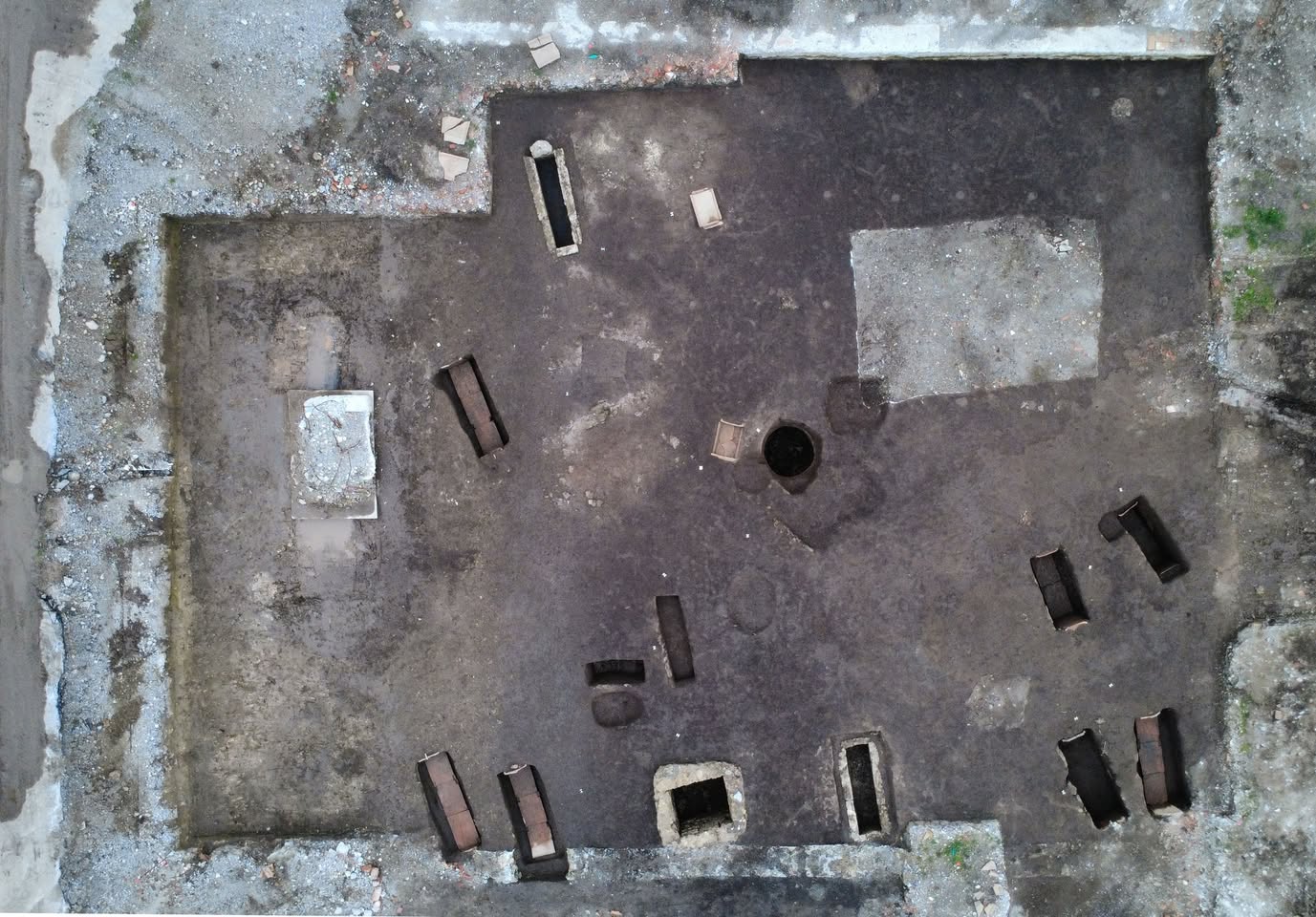
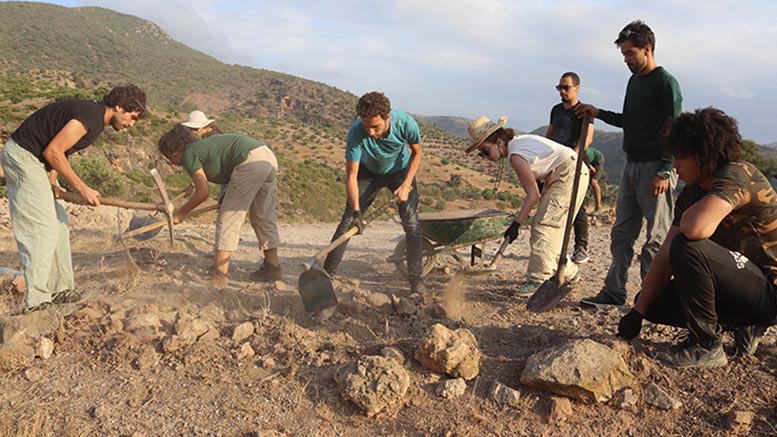
Located just 10 kilometers from Morocco’s northern Atlantic coast and about 30 kilometers southeast of Tétouan, Kach Kouch lies near the Strait of Gibraltar, a natural gateway between Africa and Europe. Here, archaeologists led by Hamza Benattia Melgarejo from the University of Barcelona have unearthed the remains of a one-hectare settlement—small by modern standards but rich in detail and implication. The site reveals a sequence of occupation phases, each representing different periods of growth and change. The earliest traces date back to around 2200 BC, signaling the beginnings of human habitation. But the most striking evidence comes from the period between 1300 and 900 BC, when the village clearly emerged as a settled, agricultural community.
This community built wooden and mud-brick houses, carved storage silos into the bedrock, and used grinding stones to process domesticated grains like barley and wheat. Animal remains at the site—primarily of sheep, goats, and cattle—point to a mixed economy of farming and livestock rearing. This was not a group of nomadic pastoralists or scattered hunter-gatherers. It was a thriving settlement rooted in the land, developing stable food systems and architectural techniques that suggest continuity and local knowledge passed down over generations.

What makes Kach Kouch even more fascinating is its connection to wider Mediterranean cultural currents. While the earliest tools and structures are consistent with indigenous Maghreb traditions, the later layers—dated between 800 and 600 BC—reveal signs of external influence. Pottery made on a wheel, iron tools, and stone-built architecture appear in these later phases, indicating contact with or influence from more technologically advanced societies to the east. These artifacts suggest that the village wasn’t isolated but part of a broader web of trade, migration, or cultural exchange that spanned the Mediterranean long before the region was colonized by outsiders.
This evidence calls into question the dominant historical view that civilization arrived in the Maghreb with the Phoenicians. Instead, the people of Kach Kouch were already farming, building, and evolving within a dynamic and interconnected world. Their village, poised near one of the busiest maritime crossroads in antiquity, likely served as a node for early exchange between Africa and Europe. Until now, the Maghreb’s prehistoric role in Mediterranean history was underexplored not because it lacked significance, but because it lacked thorough investigation. Kach Kouch changes that.

The significance of the discovery is profound. As Melgarejo notes, Kach Kouch is among the first well-documented examples of continuous Bronze Age settlement in the Maghreb. Its architecture, agriculture, and adoption of foreign innovations reveal a society that was far more complex and adaptable than previously believed. These findings compel historians and archaeologists to reconsider the Maghreb’s role in prehistoric Mediterranean networks—not as a peripheral zone but as an active and evolving landscape with its own contributions to human history.
The excavation of Kach Kouch raises exciting questions for the future. How many more such settlements lie undiscovered across North Africa? Could the Maghreb have played a more central role in Bronze Age innovation than we’ve ever imagined? And how did its communities adapt and evolve as the region gradually transformed from forested terrain to the arid landscapes we see today?
What is clear is that Kach Kouch isn’t just a remarkable archaeological site—it’s a window into a lost world that once pulsed with life, ingenuity, and connectivity. It reveals a Maghreb that was never empty but alive with stories waiting to be told. And as the layers of earth continue to yield their secrets, they remind us that history is never fixed—it’s a living, unfolding narrative, one discovery away from transformation.