What if a fossil could tell us more than just how an animal died? What if it could whisper secrets about how it lived, about the air it breathed, the food it ate, and the illnesses it fought? For decades, we have looked at ancient bones as silent monuments to a bygone era, skeletal remains that tell a story of anatomy and extinction. But a groundbreaking discovery is transforming these stony relics into vibrant biological archives, revealing the intimate details of life from millions of years ago. Deep within the microscopic pores of fossilized bone, scientists have found chemical ghosts, the preserved molecules from long extinct metabolic processes, that are rewriting our understanding of the ancient world. These are not just bones anymore; they are time capsules holding the very essence of life.
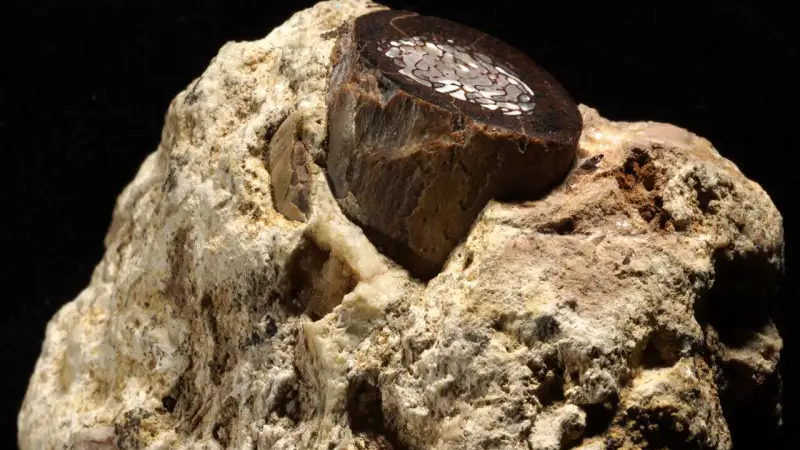
The story of this incredible breakthrough unfolds in the heart of Africa, across the landscapes of Tanzania, Malawi, and South Africa, places where our own human ancestors once walked. A team of researchers, led by Timothy Bromage from the NYU College of Dentistry, decided to look for something incredibly small and fragile within the fossils of animals that lived between one and three million years ago. They were not searching for DNA, which is notoriously difficult to preserve, but for metabolites. These molecules are the tiny byproducts of life, the chemical fingerprints left behind by digestion, growth, and other bodily functions. The team analyzed a variety of fossils, from ancient rodents and pigs to majestic elephants and antelopes, all of whom shared an ecosystem with early hominins. Using a highly sensitive technique called mass spectrometry, they were able to detect and identify thousands of these delicate molecules, which had been locked away in mineral prisons for an astonishing length of time.
But how could such fragile organic traces survive for millions of years? The answer lies in the very structure of bone itself. As an animal lives and grows, its blood, rich with metabolites, circulates through a vast network of tiny vessels that permeate its bones. As new layers of bone mineralize, they trap these molecules within microscopic spaces, protecting them from the decay and degradation that would normally erase them from existence. This process creates a permanent chemical snapshot of the animal’s internal state, a record of its health and diet preserved in stone.
The information unlocked from these ancient molecules is nothing short of revolutionary. By analyzing the types of plant metabolites found in the bones of herbivores, the researchers could reconstruct the ancient environment with breathtaking precision. The presence of compounds linked to specific plants, such as aloe and asparagus, revealed what these animals were eating. Since these plants only grow under specific conditions, their chemical signatures acted as a guide to the past, telling scientists about the soil, the amount of rainfall, the average temperature, and even how dense the tree canopy was. The combined evidence from all the fossils consistently pointed to a world that was significantly warmer and wetter than the same regions are today, painting a vivid picture of the lost landscapes of our ancestors.
Perhaps the most fascinating revelations came from the stories of individual animals. The metabolites could distinguish between males and females through estrogen related markers. Even more astonishingly, they offered a diagnosis for an animal that lived 1.8 million years ago. In a single fossilized bone belonging to a ground squirrel from Tanzania’s Olduvai Gorge, the team discovered the distinct chemical signature of an infection. They found traces left by Trypanosoma brucei, the parasite that causes sleeping sickness, along with the molecular evidence of the squirrel’s own inflammatory response to the disease. It is a profoundly humanizing discovery, a window into the suffering of a single, tiny creature that lived and died in the deep past. This new field of study effectively allows scientists to become field ecologists for prehistoric ecosystems, observing the health and interactions of a community that vanished millennia ago. This research, first published in the journal Nature, provides a powerful new tool for understanding the worlds of the past. It transforms our view of fossils from simple objects of death into complex narratives of life, each one a library of chemical information waiting to be read, reminding us that the past was once as vibrant and alive as our world is today.