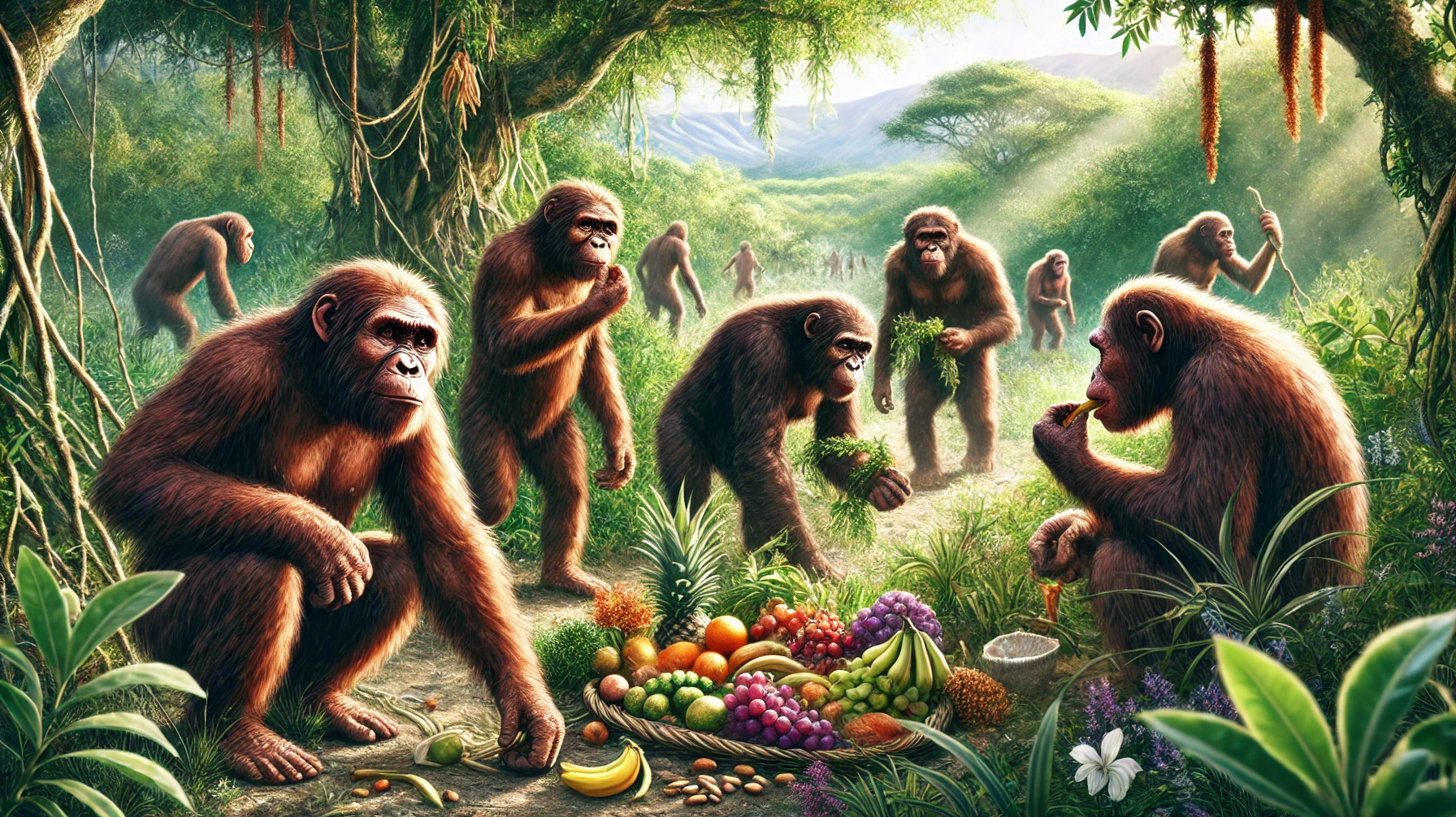
What if our ancestors weren’t the meat-eating hunters we often imagine, but instead thrived on plants for millions of years? A groundbreaking study challenges long-held beliefs about early human diets, revealing that Australopithecus—a genus of hominins that lived 3 million years ago—was predominantly vegetarian. Using advanced nitrogen isotope analysis on fossilized tooth enamel, researchers have painted a vivid picture of their plant-based diet, rich in fruits, leaves, and other vegetation.
Australopithecus inhabited the ancient landscapes of southern Africa, including the Sterkfontein Caves, now known as the “Cradle of Humankind.” These lush environments provided an abundance of plant life, shaping the dietary habits of these early hominins. Their teeth and jaw structures further support this discovery, showing adaptations ideal for chewing fibrous plant matter. This contrasts with the sharper, carnivorous traits found in later species of the genus Homo.
For years, scientists speculated that meat-eating was a driving force behind human evolution, particularly in fueling the rapid brain growth seen in later hominins. The new findings, however, suggest that the inclusion of meat in our ancestors’ diets occurred much later than previously believed. Australopithecus, with its small brain and simple tools, thrived on vegetation, proving that early hominins adapted to their environments using the resources most readily available to them.
The African landscape of their time, marked by dense forests and open grasslands, would have offered a rich array of plants, nuts, and seeds. Seasonal changes likely influenced their eating habits, as different plants became available throughout the year. This flexible, opportunistic approach to diet helped Australopithecus survive for nearly 2 million years in changing environments.
This research challenges assumptions about the importance of meat in early human evolution. While later hominins, such as Homo erectus, began incorporating meat into their diets, likely aided by fire and advanced tools, Australopithecus thrived on plant energy. It wasn’t until much later that hunting and meat consumption became significant for humans, coinciding with greater technological and cognitive advancements.
By reevaluating the diets of Australopithecus, we gain a deeper understanding of our evolutionary journey. This discovery doesn’t just shift timelines—it emphasizes the adaptability of our ancestors and their ability to flourish in challenging environments using the natural resources around them. It also highlights the importance of continued research in unraveling the mysteries of human evolution.
As science delves deeper into our origins, this discovery stands as a reminder of how interconnected we are with the natural world. By understanding how our ancestors survived, we gain insight not only into where we come from but also into the resilience and ingenuity that define us as a species.
Source: Science Daily
Did Our Ancestors Thrive Without Meat?