
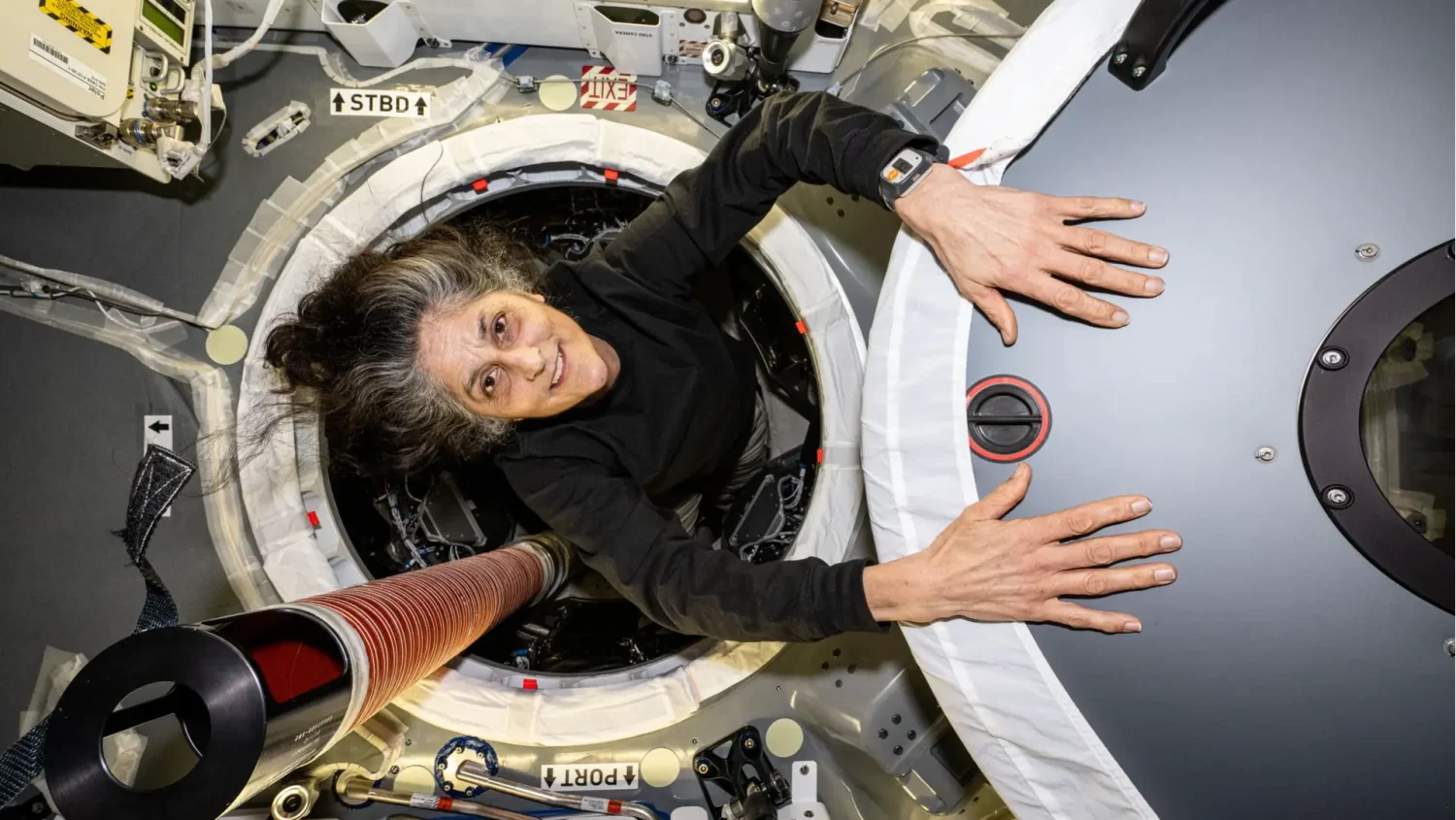
Picture this: After nearly nine months, 286 days to be exact, floating aboard the International Space Station (ISS), NASA astronaut Sunita Williams finally returned to Earth alongside her crewmate Barry “Butch” Wilmore. Their epic, unplanned marathon in orbit was a wild ride, but landing back on solid ground wasn’t the happy ending you’d expect. Instead, it’s the start of a grueling 45-day rehabilitation odyssey. Sunita Williams can’t just hop out of the capsule, hug her family, and grab a coffee. Nope, her body’s been reshaped by the relentless grip of microgravity, and now she’s got to fight to reclaim it. So, what’s next for Sunita Williams, and why does this hellish recovery matter for the future of Mars and Moon missions?
The Microgravity Makeover: A Body in Chaos
Space isn’t kind to the human body. Without Earth’s gravity tugging at her every move, Sunita Williams’ muscles, especially those powerhouse legs and back, wasted away like a couch potato’s after a Netflix binge. Studies show astronauts can lose up to 20% of their muscle mass in just 5 to 11 days up there. Imagine what 286 days does! Her bones? They’ve been shedding calcium faster than a snake sheds skin, 1 to 2% per month, leaving them brittle and osteoporosis-like. Sunita Williams might’ve stepped off that capsule looking like a superhero, but inside, her skeleton’s taken a beating that could snap under Earth’s pull if she’s not careful.
Then there’s the freaky stuff: her fluids went rogue. In space, blood and water don’t settle in her legs like they do here, they rush to her head, puffing up her face like a balloon and pressing on her eyeballs. That’s not just a funny photo op, it’s Spaceflight-Associated Neuro-ocular Syndrome (SANS), and it’s messed with Sunita Williams’ vision. Some astronauts never see the same again. Her heart’s in on the chaos too, pumping lazily without gravity to challenge it, it’s shrunk, leaving her dizzy and wobbly when she tries to stand. Oh, and let’s not forget the cosmic radiation Sunita Williams has been bathing in, no Earthly shield to block those DNA-zapping rays, upping her cancer risk with every passing day.
The 45-Day Fight Back: Rehab Like No Other
So, what’s Sunita Williams doing now? She’s not kicking back with a medal and a beer. She’s in a NASA rehab bootcamp, battling to undo microgravity’s damage. For 45 days, Sunita Williams is strapped into a hardcore routine: physical therapists are throwing resistance bands, treadmills, and weights at her to rebuild those shrunken muscles. She’s relearning how to walk, yes, *walk*, because her coordination’s shot after months of floating. They’re scanning her bones like hawks, pumping her with calcium and vitamin D to patch up that skeletal wreckage, hoping to dodge fractures that could haunt her for life. Eye docs are on her case too, tracking every blurry glitch to see if SANS has left permanent scars. And her heart? Cardio tests galore to kickstart that lazy ticker, making sure Sunita Williams doesn’t faint every time she stands up.
Why the torture? Because Sunita Williams’ body is a living lab. Every ache, every wobble, every test result is gold for NASA. Sunita Williams and Butch’s unexpected 286-day saga, way longer than the planned 180 days, gave scientists a front-row seat to how humans hold up (or fall apart) in space’s brutal grip. That data’s a treasure map for the Moon and Mars missions coming down the pike.
Why This Matters for Mars and Beyond
Here’s the kicker: if we’re sending humans to Mars, a 6-month trip each way, plus a year or two on the surface, we can’t have them crawling out of their spacecraft like jellyfish. Sunita Williams’ rehab isn’t just about her, it’s a blueprint. Those Moon bases NASA’s dreaming up? The Mars colonies Elon Musk rants about? They’re toast unless we crack this. Her struggle proves we need more than treadmills in space. Picture this: future ships spinning like sci-fi carousels to fake gravity, keeping bones and muscles from turning to mush. Or gene tweaks to shield against radiation, straight out of a comic book, but it’s on the table. Even AI surgeons might tag along, ready to stitch up an astronaut mid-flight, millions of miles from a hospital.

