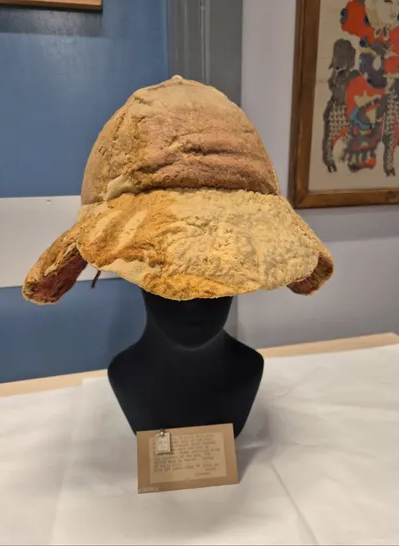
What did a Roman soldier wear to beat the desert heat? The answer survived 1,600 years, a remarkably humble garment that offers a vivid personal link to the vast empire’s everyday reality. This extraordinary discovery is a brightly colored, perfectly preserved, brimmed sun hat, an artifact so rare it recalibrates our understanding of personal protection and daily life for the legionaries stationed under the relentless Egyptian sun. Unearthed by archaeologists working through the layers of a late Roman settlement, this textile treasure offers far more than a glimpse into ancient fashion; it is a tangible piece of history that speaks volumes about adaptation, logistics, and survival in the harshest environments of the sprawling Roman world. The context of the find is crucial, locating this textile marvel in Roman Egypt, a province known as the breadbasket of the empire but also infamous for its brutal heat and sudden, blinding sandstorms. For soldiers far removed from the temperate climate of Italy, gear was not just uniform, but vital environmental protection. This cap, meticulously stitched from five different colored fabrics, was not merely a decorative accessory; its wide brim would have shielded the wearer’s eyes and neck from the intense ultraviolet radiation that beats down on the Nile Valley and the surrounding desertscapes.
The significance of this particular find cannot be overstated because textile preservation is one of archaeology’s greatest challenges. Organic materials like wool, linen, and cotton degrade rapidly when exposed to moisture, bacteria, and changing temperatures, meaning that in most parts of the Roman Empire, evidence of common clothing items has vanished entirely, leaving only metal or pottery fragments. But the miracle of the Egyptian desert is its preserving power. The arid climate, coupled with stable burial conditions, essentially freeze dries organic materials, allowing something as delicate as this stitched hat to endure for sixteen centuries with its colors still discernible and its structure largely intact. This superb preservation confirms that such hats were not anomalies but crucial, perhaps standardized, personal equipment for troops assigned to desert frontiers, highlighting the very human necessity of seeking shade. We often picture Roman soldiers in their imposing metal helmets, their *galeas*, but those helmets, while providing defense in combat, would have been unbearable ovens during a midday patrol across the dunes, demanding a lighter, more practical solution for daily routine.
The hat itself tells a story of skilled craftsmanship and resource management. It is pieced together from different colored scraps—a blend of fabrics that indicates practical reuse and efficiency, rather than luxury. It features intricate stitching that creates the structure necessary to hold the brim rigid against the breeze, a design feature that maximizes shade coverage. But as we look closer at this intricate, multicolored brim, a fascinating question arises about the soldier who owned it. Did he acquire these specific scraps locally in an Egyptian bazaar, perhaps trading some meager supplies for the materials needed, or was this hat part of a larger, empire wide provision? The truth behind the logistical supply chain of such unique, yet essential, personal items remains shrouded in the sands of time. How did the Imperial Quartermasters account for the vast climatic differences across the empire, from the damp, freezing borders of Britannia to the scorching heat of Arabia? Was this soldier issued this multi hued cap as standard gear tailored for the Aegyptus province, or did he, perhaps finding the standard issue inadequate, commission a local tailor to create this specialized sun shield just before embarking on a patrol that led to its loss or careful abandonment? The mystery of its procurement only deepens the connection to its anonymous owner.
The answer lies in understanding the localized nature of the Roman military’s adaptability. While core equipment was standardized, the Romans were masters of integrating local resources and knowledge. The likelihood is high that while the military provided general cloth rations, the actual creation of highly specific items like this sun hat was often undertaken by local artisans or by the soldiers themselves, using locally sourced textiles suited to the harsh environment. The presence of five different fabrics, meticulously pieced together, strongly suggests either a patchwork creation from scarce resources or a highly customized design meant to maximize ventilation and protection—a far cry from the uniform mass production we associate with the legions. This piece of fabric is a silent testament to the daily grind of military service, where protection from the environment was as vital as a sword or shield. It transforms our image of the Roman legionary from an anonymous automaton in armor to an individual struggling against the elements, concerned with simple, universal needs: avoiding heatstroke and sand blinded eyes. The engineering of the cap, its functional brim and light material, is a testament to an ancient, effective solution against a timeless problem that plagues desert inhabitants to this day.
The discovery, therefore, is not just about a hat; it is about humanizing the empire. It shows a Roman soldier, an individual likely thousands of miles from his home or even his cultural roots, worrying about the glare of the sun, something we all do every summer day. This artifact forces us to recognize the vulnerability beneath the armor, the simple, practical considerations that dictated survival in the ancient world. It reminds us that behind every grand military campaign and every impressive architectural ruin, there were people seeking comfort, practicality, and basic protection.
The simple, functional reality of this 1,600 year old brimmed cap connects us directly to a fleeting moment in the life of a single person whose name we will never know, yet whose need for shade transcends all intervening centuries.