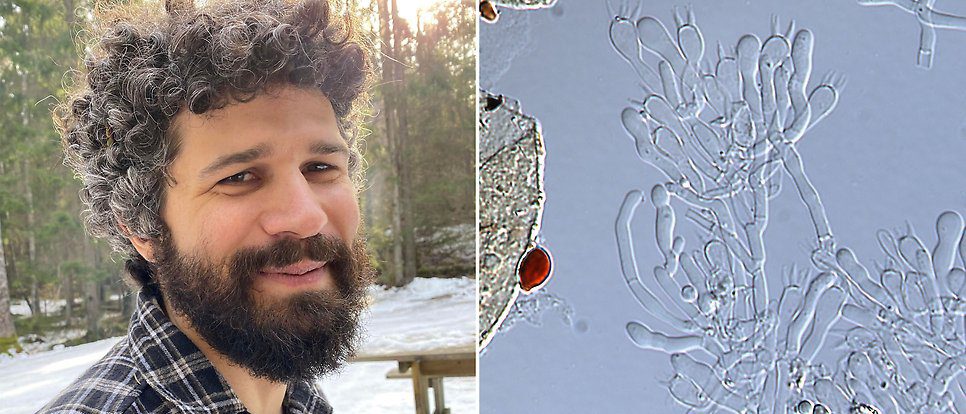
Imagine peeling back the damp, earthy layers of an ancient Nordic forest and discovering life forms that have quietly thrived there for millennia—unknown to science, yet essential to the survival of entire ecosystems. That’s exactly what a team of mycologists from Uppsala University in Sweden has done. In a breakthrough announced on March 18, 2025, they revealed the discovery of five new fungal species belonging to the Piloderma genus. This remarkable find not only reshapes the taxonomy of a critical group of fungi but also underscores the irreplaceable value of old-growth forests in preserving global biodiversity.
The Piloderma genus is composed of fungi that form ectomycorrhizal relationships with trees, acting as underground mediators between soil and root. In exchange for sugars from their tree hosts, these fungi help extract vital nutrients like nitrogen and phosphorus from the soil. Until now, only three species had been formally identified within this genus. But with the advent of advanced DNA sequencing and years of sampling in the pristine forests of Sweden, Norway, Finland, and Lithuania, researchers have tripled that number—transforming Piloderma from a modest genus into a medium-sized one and illuminating the hidden complexity of forest ecosystems.
Among the five newly named species, two are already capturing public and scientific imagination. The first, Piloderma fugax, is a particularly shy resident of old-growth forests in Gällivare, Sweden, and Trøndelag, Norway. It’s been named for its elusive nature—“fugax” meaning fleeting or shy in Latin. This species is a forest ghost, found only in deeply undisturbed woodland environments. Its presence is a potent indicator of ecological stability and biodiversity, the kind of lifeform that silently disappears when forests are logged or transformed into plantations. P. fugax has never been found in managed or disturbed woodlands, making its survival intrinsically tied to the preservation of ancient forests.

In stark contrast to the reclusive P. fugax is the eye-catching Piloderma luminosum, whose yellow-to-orange fruiting bodies appear almost as if they glow amid the undergrowth. Until recently, it was mistaken for the more common P. byssinum, but DNA sequencing has revealed its unique identity. This vivid fungus turns out to be surprisingly widespread across the boreal forests of Northern Europe, proving that even well-studied habitats can still yield surprises when modern science is applied.
What makes these discoveries especially compelling is the technique used to identify them. Traditional mycological research relies heavily on morphology—what a fungus looks like under the microscope or in the wild. But many fungi are notoriously difficult to differentiate this way. The team at Uppsala University employed cutting-edge genetic tools to sequence the DNA of hundreds of samples, revealing minute genetic differences that aren’t visible to the naked eye. These differences are crucial; they determine whether two fungi can interbreed and how they interact with the ecosystems around them. In this case, they confirmed that each of the five newly described species is genetically distinct and reproductively isolated, fulfilling the criteria to be recognized as new to science.
But the story isn’t just one of taxonomy. It’s also a warning. The discovery of P. fugax reinforces the vital role that old-growth forests play in protecting species we have barely begun to understand. These forests are not just relics of the past—they are living libraries of biodiversity. Logging, monoculture plantations, and land development are rapidly shrinking the habitats where these fungi exist, often before scientists have had a chance to find them. As the Uppsala researchers noted, habitat loss in Sweden is proceeding at such a pace that P. fugax and similar fungi could vanish without a trace if old-growth areas continue to decline.
Fungi are too often overlooked in conservation strategies, even though they are keystones of ecosystem health. Through their symbiotic relationships, Piloderma fungi enhance nutrient uptake in trees, improve drought resilience, and help store carbon in the soil—functions that are critically important in the face of climate change. Protecting the forests that harbor them is not just about saving rare species; it’s about safeguarding the natural infrastructure that makes life on Earth possible.
The findings, published in the journal Fungal Biology, make a compelling case for increased fungal research and forest conservation. These five new species are likely just the beginning. As tools like DNA sequencing become more accessible, scientists expect many more hidden species to emerge from the leaf litter, quietly rewriting what we thought we knew about the natural world.
The discovery of these fungi, particularly the charismatic P. luminosum and the elusive P. fugax, reminds us that even in a modern world defined by rapid change and technological progress, there are still secrets left to unearth—wonders clinging to the roots of ancient trees, thriving in silence beneath our feet. But they won’t wait forever. Preserving the forests that shelter them is a race against time—and now, more than ever, the clock is ticking.