
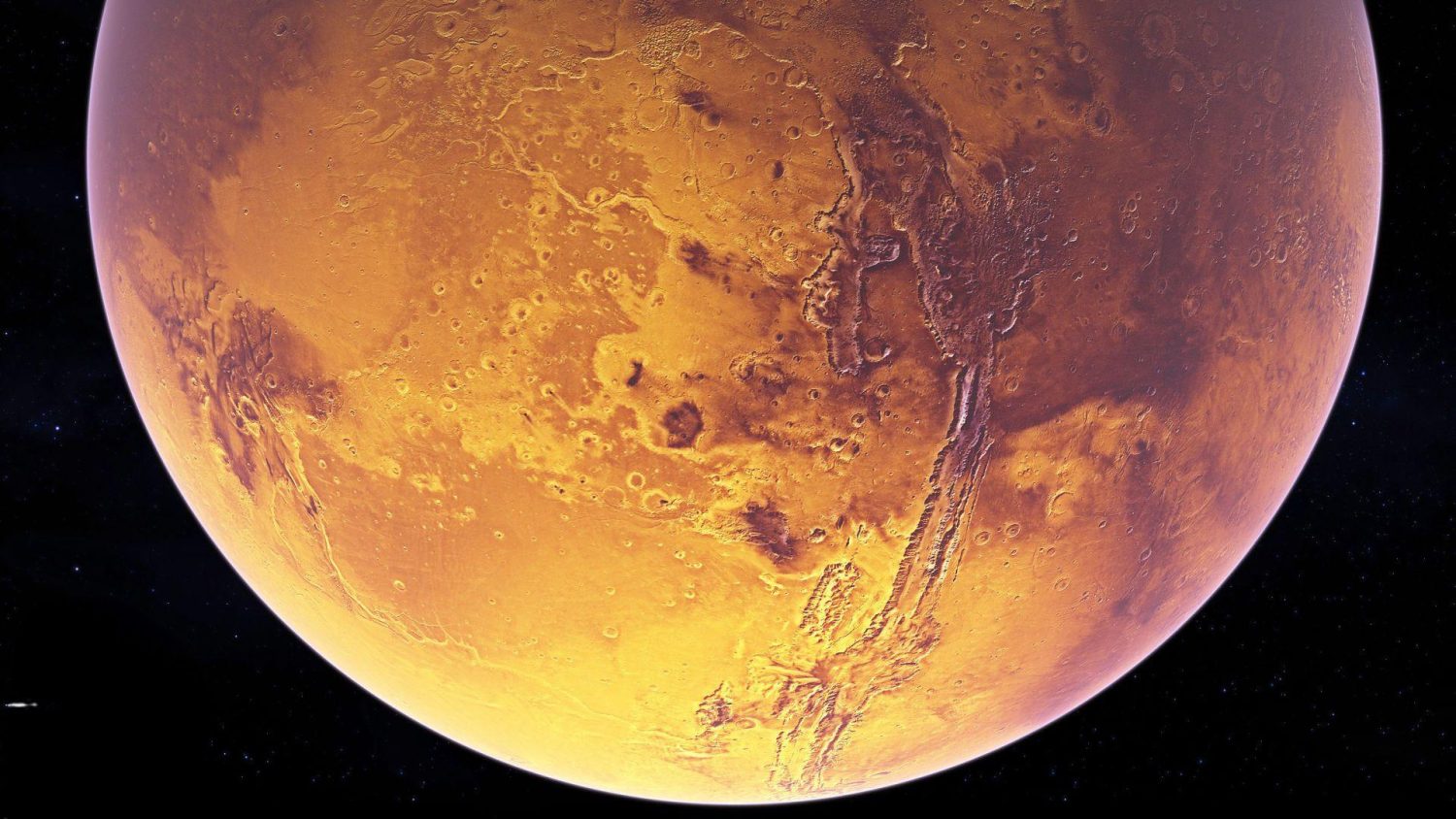
What if the story of water on Mars began far earlier than we ever imagined? What if a single, ancient crystal could rewrite the timeline of Martian history?
This isn’t science fiction. Thanks to a discovery from the meteorite NWA 7034—nicknamed “Black Beauty”—scientists now have the oldest direct evidence of water on Mars, dating back an astonishing 4.45 billion years. But what secrets does this tiny zircon crystal hold, and how did it change what we know about the Red Planet?
The Crystal That Changed Everything
At the heart of this discovery lies a zircon crystal embedded within the Black Beauty meteorite, a rare chunk of Martian rock that fell to Earth. Zircon crystals are nature’s time capsules, preserving the conditions present during their formation. But this particular crystal was anything but ordinary.
Through advanced techniques like elemental analysis and isotopic dating, scientists discovered that the zircon had unique “oscillatory zoning” patterns of iron, aluminum, and sodium—a telltale sign of hydrothermal activity. In simpler terms, this crystal had been exposed to hot water interacting with rock, much like the hydrothermal vents found on Earth’s ocean floors.
But why does this matter? Hydrothermal activity on Earth is known to create rich ore deposits and sustain microbial life. The discovery of similar activity on Mars raises the possibility that early Mars had the right ingredients for life. Could primitive organisms have once thrived in these hydrothermal environments?
How Hydrothermal Activity Unveiled Mars’ Watery Past
Hydrothermal activity refers to hot water interacting with rocks, altering their chemical composition. On Earth, hydrothermal vents at the bottom of the ocean support entire ecosystems of microorganisms. Now, it seems that a similar process may have occurred on ancient Mars.
The oscillatory zoning in the zircon crystal is critical evidence of this activity. As the crystal grew, it recorded fluctuations in the chemical environment, much like the rings of a tree reveal changes in climate. The presence of elements like iron, aluminum, and sodium suggests that water was not just present but actively shaping the planet’s geology.
This discovery aligns with previous theories that Mars once had vast bodies of water, possibly even a global ocean. But while earlier studies focused on water from the Noachian period (about 4.1 to 3.7 billion years ago), this zircon pushes the timeline of water on Mars back by 300 million years, placing it in the Pre-Noachian era—right after Mars’ formation.
What could a wet Pre-Noachian Mars mean for the possibility of life? Could life have emerged far earlier than previously thought?
Why “Black Beauty” is a Treasure Trove for Science
The NWA 7034 meteorite, also known as “Black Beauty,” is no ordinary rock. Discovered in the deserts of Northwest Africa, this meteorite is a 320-gram fragment of Martian crust, making it one of the oldest and most valuable Martian samples on Earth.
While most Martian meteorites originate from volcanic rock, Black Beauty is a breccia—a type of rock made from fragments of older rocks fused together during impact events. This unique structure gives it a broader geological record, offering a “snapshot” of Mars’ crust over a long period of time.
Its importance extends beyond this discovery. Black Beauty has been studied to understand Martian impact craters, volcanic activity, and even the atmospheric conditions of early Mars. But this zircon crystal has revealed something far more profound: the story of ancient water on Mars, long before it was thought to exist.
But what does this mean for future exploration of Mars? Will the search for life on Mars focus on these ancient hydrothermal sites?
How This Discovery Changes Our Understanding of Mars
For decades, scientists have searched for signs of water on Mars. The discovery of water ice at the poles and seasonal water flows offered glimpses of Mars’ “watery past.” But this new evidence suggests that water was present on Mars as far back as 4.45 billion years ago—a time when life on Earth was just beginning to emerge.
The implications are profound. If water existed on Mars so early, then life had far more time to develop than previously believed. This discovery raises the likelihood that life may have existed on Mars, potentially forming in hydrothermal environments similar to those that support life on Earth today.
With this new evidence, future Mars missions, including NASA’s Mars Sample Return and ESA’s ExoMars, may prioritize the search for ancient hydrothermal sites. These regions could harbor biosignatures—chemical “footprints” of past life.
But what about Black Beauty? What’s next for this meteorite that has already revealed so many secrets?
Conclusion: The Oldest Chapter of Mars’ Watery History
As of today, the 4.45-billion-year-old zircon crystal in the Black Beauty meteorite stands as the oldest evidence of water on Mars. It pushes back the timeline of Martian water by 300 million years and raises profound questions about the planet’s potential for habitability.
The discovery of hydrothermal activity on early Mars paints a picture of a more dynamic and water-rich planet than we once thought. Could early Mars have harbored life? The answer may lie in future missions that continue to explore the Red Planet’s crust, hydrothermal systems, and ancient impact sites.
But one thing is certain—this small zircon crystal has rewritten the history of water on Mars. And if it has revealed this much, one can only wonder what secrets are still hidden in the rocks of the Red Planet.