Imagine a time when our species was not alone, a world where creatures resembling figures of myth walked alongside us. Did your ancestors, embarking on one of humanitys greatest migrations, actually breed with a real life ‘Hobbit’? New and groundbreaking genetic research has now solidified the incredible timeline of one of the most significant chapters in human history, confirming that the first modern humans arrived on the continent of Australia approximately 60,000 years ago, a colossal achievement that places a definitive marker on our global journey. This finding is more than just a date on a calendar; it confirms the profound tenacity and navigational skill of these early pioneers who faced daunting ocean crossings and a starkly different world, and it carries with it the electrifying possibility that they encountered, and potentially intermingled with, mysterious archaic human populations already dwelling in the isolated islands along their route.
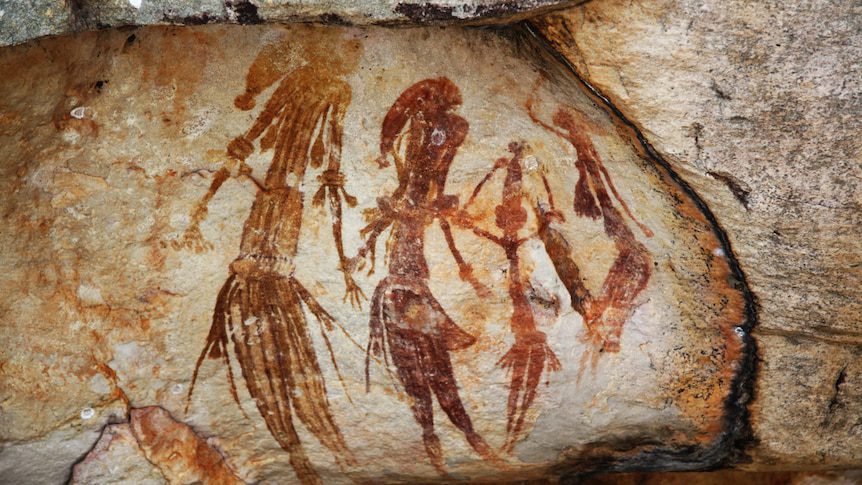
The critical importance of this discovery lies in how it bridges decades of debate between archaeological evidence and genetic modeling. For years, skeletal and artifact remains, particularly from sites like Madjedbebe in northern Australia, suggested an arrival date of 65,000 years ago, a timeline that many genetic models struggled to fully reconcile. This new research, rooted deep within the molecular data of contemporary Indigenous Australians, provides the crucial genetic validation, anchoring the timeline firmly at the 60,000 year mark and affirming the sheer scale of the journey from Africa, across Asia, and into the vast landmass known as Sahul, which encompassed Australia, New Guinea, and Tasmania during periods of lower sea levels. These individuals were the ultimate explorers, the ones who completed the final leg of humanitys grand dispersal across the planet, settling the last major continental landmass beyond the Americas.
To understand how scientists can read this story of deep history from the present day, we must appreciate the elegance of genetic sequencing. Every human carries within their cells a vast historical document written in DNA, which acts like a molecular clock. As DNA is passed down through generations, small, random changes, or mutations, accumulate at a relatively stable rate. By comparing the number of these differences between the genomes of Indigenous Australian populations and other global human groups, geneticists can effectively rewind the clock. The more differences they find, the longer the two groups have been separated. This meticulous comparison confirms a deep, singular branch point leading to the first Australians, dating precisely to that 60,000 year window, suggesting a rapid and successful initial dispersal across the continent thereafter.
But the journey from mainland Asia to Sahul was fraught with encounters, a path that led through the complex island chains of Wallacea, a biological hotspot and historically home to creatures that defied the typical evolutionary narrative. As our ancestors migrated, they were not traveling through empty landscapes; they were entering a region already inhabited by other forms of humanity, species that had diverged from our common ancestor hundreds of thousands of years earlier. Within the genetic map of these first Australians, researchers identified faint but undeniable traces of DNA that could not be attributed to modern humans, Neanderthals, or Denisovans. This signal—a whisper of genetic material known only as a “ghost lineage”—suggested a meeting. Could this elusive genomic signature be the echo of the most fascinating and enigmatic archaic cousin of all, the creatures popularly nicknamed the Hobbits?
The Hobbit, or *Homo floresiensis*, was a dwarf species of hominin known from skeletal remains on the remote island of Flores. Standing barely three feet tall with surprisingly small brains, they managed to thrive and survive until perhaps as recently as 50,000 years ago, placing them firmly in the timeline and geographic path of the migrating modern humans. The existence of these creatures, alongside the newly discovered *Homo luzonensis* in the Philippines, paints a picture of a Southeast Asian archipelago teeming with biological diversity and multiple coexisting human species. The question hanging suspended in the air, the mystery encoded in the ghost DNA, is whether these intrepid *Homo sapiens* travelers paused long enough during their epic journey to share more than just the landscape with these diminutive, archaic cousins, incorporating a small but persistent piece of their history into our own genetic tapestry.
While the evidence remains inferential, scientists suggest that the small but clear genomic signals point overwhelmingly to interbreeding with a distinct, deeply archaic human population within the Southeast Asian island realm before the final crossing into Sahul. Though the DNA is highly degraded and finding direct *Homo floresiensis* DNA for comparison remains a profound challenge, the timing, location, and divergence profile of this mysterious genetic segment makes the Hobbit the most compelling candidate for this forgotten ancestor. The finding confirms that humanitys migration was not a neat, linear progression, but a complicated process of movement, adaptation, and intimate contact with many different forms of humanity, most of whom eventually vanished. This knowledge forces us to broaden our definition of who ‘we’ are, recognizing that our species arrived in Australia 60 millennia ago not just as conquerors of geography, but as carriers of a deeply complex, shared biological legacy. This incredible genetic map confirms not only the profound tenacity of our ancestors but also that the story of humanity is far messier, deeper, and more interconnected than we ever imagined, reminding us that we are all living libraries of the ancient world, echoing the footsteps of the very first Australians and the enigmatic archaic cousins they met on their epic journey.