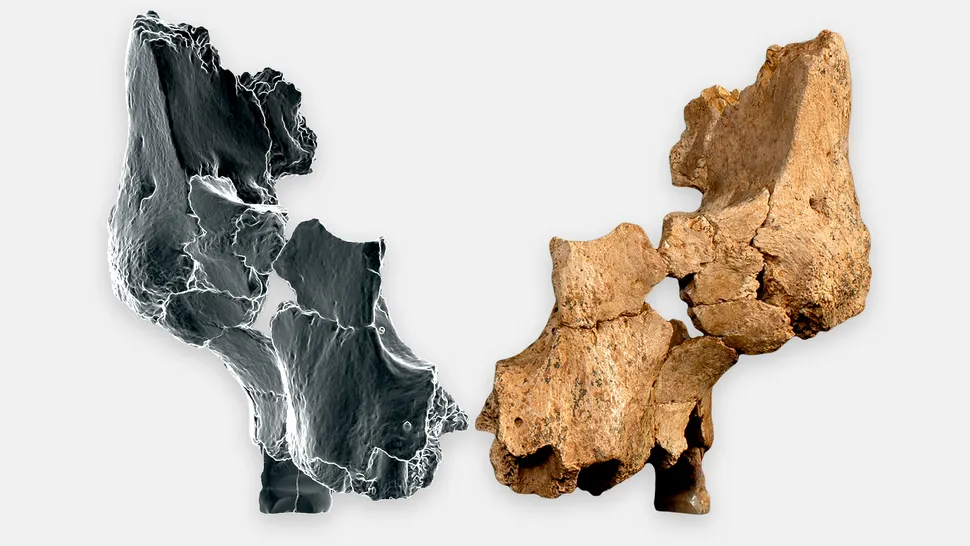
The discovery of a 1.4-million-year-old hominin facial fossil in Spain’s Sima del Elefante cave has reshaped our understanding of early human migration into Western Europe. Unearthed in the Atapuerca Mountains, this fossil—nicknamed “Pink”—is now the oldest known human facial remains in the region, pushing back the timeline of human presence in Europe by several hundred thousand years. The find challenges long-standing beliefs that Homo antecessor was the first species to inhabit the continent, instead suggesting that an early relative of Homo erectus arrived much earlier than previously thought.
The fossil, which includes 80% of the left side of an adult individual’s face, features a robust structure distinct from Homo antecessor. Scientists now propose that this early European hominin may be more closely related to Homo erectus, the species that first emerged in Africa nearly 2 million years ago and is recognized as a key ancestor of modern humans. The new evidence suggests that human migration into Europe was not a singular event but rather a more complex process involving multiple waves of hominin dispersal.
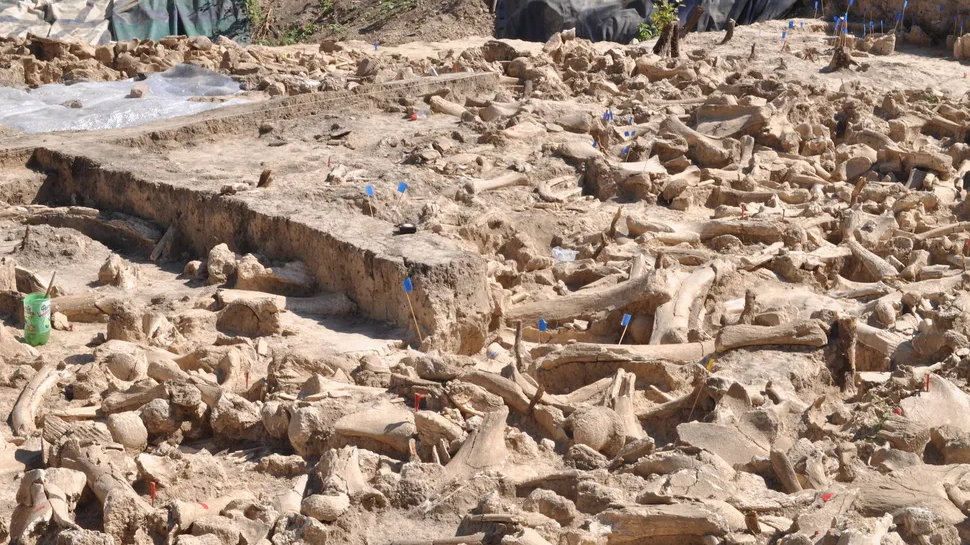
Accompanying the fossil were stone tools and butchered animal bones, indicating that these early hominins were skilled tool users engaged in hunting and butchering. This discovery provides critical evidence that early humans in Europe were not merely passive wanderers but active participants in their environment, adapting to the challenges of survival in a new landscape.
The significance of “Pink” extends beyond its anatomical features. The presence of such an early hominin in Europe raises questions about potential interactions between different human species. Could these early migrants have coexisted with later hominin populations such as Homo antecessor? If so, this challenges the conventional view of a linear migration model, instead suggesting that Europe’s early human populations were more diverse and dynamic than previously assumed.
To further investigate the origins of “Pink,” researchers are planning paleoproteomic analysis—a cutting-edge technique that examines ancient proteins preserved in fossils. This method could help determine the individual’s biological sex and its genetic relationship with other early hominin species, providing new insights into human evolutionary history.

This discovery marks a turning point in our understanding of hominin migration into Europe. Instead of a single wave of early humans arriving at a fixed point in time, the evidence suggests a series of migrations and adaptations that shaped the continent’s early human populations. The Sima del Elefante site is now a crucial location for uncovering more details about these early European settlers, holding the potential to reveal even more about the deep history of our species.
As scientists continue to analyze the remains and surrounding artifacts, future findings may further refine our understanding of early human evolution. Each new discovery adds another layer to the intricate and ever-changing story of humanity’s past, demonstrating that history is far from settled and that the journey of our ancestors was more complex than previously imagined.