In the vast archipelago of Indonesia, nestled within the Lesser Sunda Islands, lies a world of dramatic volcanoes and vibrant coral reefs. This is Alor, an island remote not just in geography but in time. It is a place of staggering linguistic diversity, where dozens of unique languages are spoken in villages that cling to the steep volcanic slopes. For generations, anthropologists and linguists have been drawn to Alor to study its human tapestry, but a recent discovery suggests the island’s greatest secrets were not hidden in its languages, but in its profound connection to the natural world. It began not with a map to buried treasure, but with a quiet conversation between a team of visiting researchers and a village elder. He spoke of a sacred place, a cave of healing that had been sealed for generations, its location passed down through a select line of storykeepers. Intrigued by the tale, the team followed the elder deep into the island’s rugged interior, eventually arriving at a rock face concealed by a curtain of ancient vines. Behind it was a carefully constructed stone wall, sealing the entrance to a small cavern. The researchers, expecting little more than a ceremonial site, could not have prepared for what they were about to find.
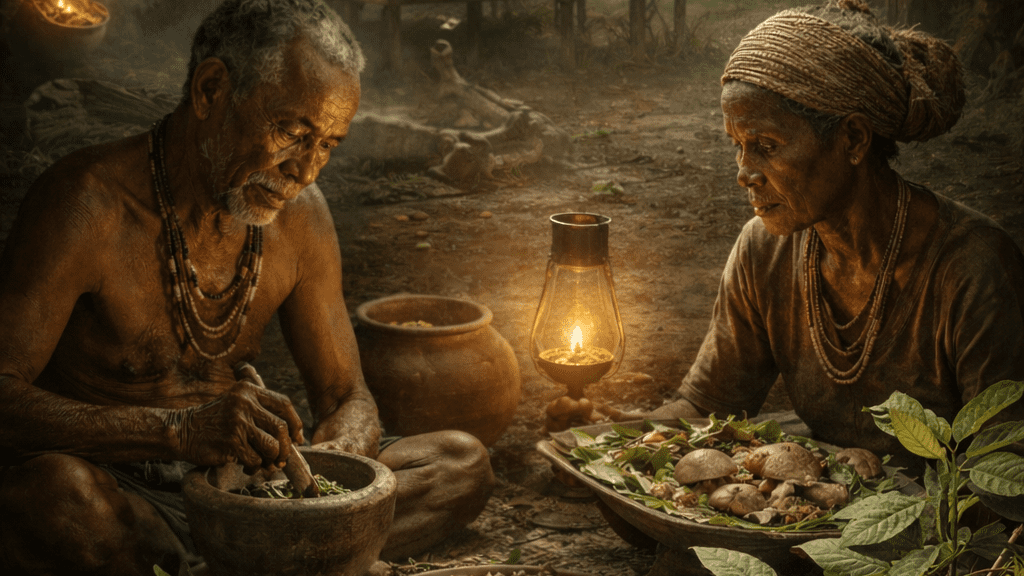
Inside, the air was still and cool, preserving an astonishing sight. Arranged on stone shelves were hundreds of bamboo tubes and dried palm leaf manuscripts, each etched with a complex and unfamiliar script. Beside these texts lay dozens of sealed clay jars. When carefully opened, these jars were found to contain a meticulously organized collection of desiccated plants, seeds, fungi, and mineral powders. It was not a tomb or a temple. It was a library, an ancient pharmacopoeia detailing a complete medical system of a forgotten people. This was the treasure of Alor, a trove of knowledge rather than gold. The painstaking work of documenting and understanding the find began immediately. Linguists worked to decipher the script, while botanists began the process of identifying the preserved plant specimens. It soon became clear that the texts were far more than simple folklore. They contained systematic instructions for treating a huge range of ailments, from infections and fevers to digestive issues and snakebites. The writings described which plants to use, how to prepare them, the correct dosages, and even the ideal time of year for harvesting to ensure maximum potency. It was a clear demonstration of a sophisticated, evidence based approach to medicine, developed over centuries of careful observation and practice.
The implications of this discovery are immense, extending far beyond the fields of anthropology and history. This ancient library represents a roadmap for modern medical discovery, a field known as ethnobotany, which studies the traditional knowledge and customs of a people concerning plants and their uses. Each remedy documented in the Alor cave is a potential lead for developing new pharmaceuticals. Scientists are particularly excited about the potential for finding new antibiotics. As modern medicine faces a growing crisis of antibiotic resistance, where common bacteria are no longer defeated by our best drugs, the search for new compounds is more urgent than ever. Initial analysis of some of the samples from Alor has already yielded incredible results. A specific type of fungus, which the ancient texts describe as a treatment for weeping sores and infected wounds, was found to produce a compound that is highly effective against several strains of drug resistant bacteria in the laboratory. This single finding has opened up a new frontier in the fight against infectious disease, suggesting that answers to modern problems may lie hidden within ancient wisdom.
This incredible find also serves as a powerful reminder of what is at stake as the world’s remote cultures and ecosystems disappear. The Alor library was likely sealed away to protect it during a period of upheaval, preserving knowledge that might otherwise have been lost forever. It highlights the fact that indigenous communities around the globe are the custodians of an invaluable understanding of their environment. This knowledge, often passed down orally, is incredibly vulnerable. The Alor discovery is a rare case where such a comprehensive body of information was physically preserved. The research, which was first brought to light in a report from the science news service Phys.org, continues to unlock the secrets of the cave. The treasure of Alor is not just about the potential for new medicines. It is a testament to the ingenuity and deep ecological intelligence of its people, a profound lesson that the wisdom of the past might just be the key to ensuring a healthier future for all of humanity.