Water, the fundamental molecule that sustains life as we know it, may have formed much earlier in the universe’s history than previously believed. New research suggests that water molecules could have emerged as early as 100 to 200 million years after the Big Bang, challenging long-standing assumptions about when and how this life-enabling substance first appeared in the cosmos.
Scientists have long believed that water formation was contingent on the presence of oxygen, which is produced through nuclear fusion within stars. Since the earliest stars—known as Population III stars—were composed almost entirely of hydrogen and helium, conventional thinking placed the appearance of water relatively late in cosmic history, requiring multiple generations of stellar evolution to produce sufficient oxygen. However, recent simulations of early supernova explosions suggest that the fusion of oxygen and hydrogen could have taken place much earlier than expected, significantly accelerating the timeline of water formation.
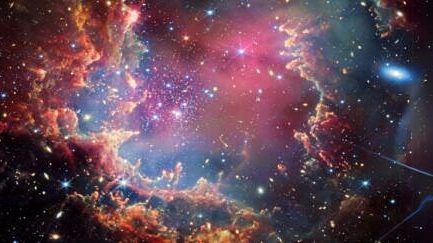
The key to this process lies in the aftermath of supernovae—the explosive deaths of massive stars that enrich the surrounding space with heavier elements. While supernovae themselves did not directly create water, they seeded the interstellar medium with oxygen atoms, which later interacted with hydrogen molecules in cooling gas clouds, allowing water to form. The study found that as these stellar remnants cooled rapidly, hydrogen molecules combined with newly forged oxygen atoms, leading to the natural formation of water. This suggests that, despite the scarcity of heavy elements in the early universe, the conditions necessary for water production existed soon after the first stars exploded, potentially seeding the cosmos with this essential molecule much earlier than previously assumed.
These findings carry profound implications for our understanding of planetary formation and the potential for life beyond Earth. If water was present in the early universe, then rocky planets capable of supporting life may have formed much earlier than previously believed. This raises the possibility that habitable environments existed long before our solar system came into being, expanding the search window for ancient extraterrestrial life. The presence of early water challenges the notion that conditions necessary for life were rare in the early cosmos and suggests that life-friendly environments may have been more common than expected.
Moreover, this discovery reframes the role of supernovae in cosmic evolution. Beyond being catastrophic endpoints for massive stars, these stellar explosions may have served as the very factories that jumpstarted the chemistry of life. The dispersal of water-forming elements into the interstellar medium would have influenced the composition of gas clouds that later condensed into planets, setting the stage for the development of habitable worlds billions of years ago. By providing oxygen and other key elements necessary for organic chemistry, supernovae may have played a crucial role in shaping the building blocks of life across the cosmos.
Future studies, including observations from the James Webb Space Telescope and next-generation radio telescopes, may provide further evidence of early-universe water by detecting molecular signatures in ancient cosmic structures. The ability to identify water in some of the oldest interstellar clouds and protogalaxies could revolutionize our understanding of how and where the conditions for life emerged in the universe. If confirmed, this research could reshape our perspective on planetary formation, cosmic chemistry, and the evolution of habitable worlds.
As we continue to uncover the origins of essential life-building molecules, one question remains: If water existed so early in the universe’s history, how soon after did life itself begin?