Astronauts might one day eat food brewed by microbess… not on Earth, but in orbit.
In a revolutionary step toward solving one of the biggest challenges in human space exploration, scientists from Imperial College London, Cranfield University, and Frontier Space have launched a miniature laboratory into Earth’s orbit to test whether engineered microbes can make food in space. These are not your everyday germs. These are specially modified yeast strains designed to produce edible proteins using a method called precision fermentation. And if this works, it could completely transform how we feed astronauts on long term missions to the Moon, Mars, and beyond.
But let’s step back for a moment. Why is food such a huge problem in space?
Feeding people in space isn’t just about packing enough meals. Every extra kilogram launched into orbit costs money. Lots of it. According to estimates, it costs nearly £20,000 per astronaut per day for food and supplies during missions. That number skyrockets for longer journeys, such as missions to Mars that could last years. Add to that the issues of food freshness, storage, and nutritional value, and it becomes clear that relying entirely on Earth based supplies is not sustainable. This is why the European Space Agency (ESA), which is funding this experiment, is focused on developing food solutions that could support multi planetary human life. So what if astronauts could grow food while in space?
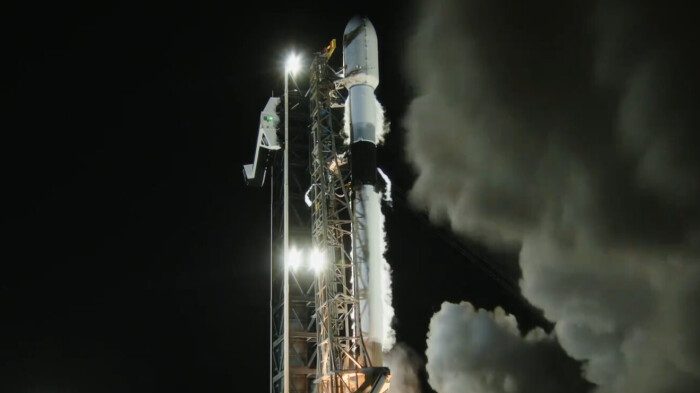
That’s exactly what this new mission is exploring. On April 21, 2025, a SpaceX rocket launched the Phoenix capsule, Europe’s first commercial returnable spacecraft, into orbit. Inside was a tiny lab containing engineered yeast. These microbes were designed to produce complete, nutritious proteins when supplied with basic nutrients and water. The challenge was to see if they could still function in microgravity, the weightless environment of space.
The capsule stayed in orbit for just over three hours before returning to Earth the same day. This was a short, high impact test, meant not to produce meals, but to measure how microbes behave and whether their protein producing machinery can survive space launch, orbital pressure, and zero gravity.
The process used is called precision fermentation, and it’s already showing promise on Earth in the alternative protein sector. Microbes are genetically programmed to produce food grade proteins, similar to how yeast produces alcohol in beer. The question is, can they still perform when gravity disappears, and fluids and cell behavior change in unpredictable ways?
The team behind this test blends expertise in engineering, biotechnology, and space systems. Dr. Rodrigo Ledesma Amaro, from Imperial College London’s Department of Bioengineering and the Bezos Centre for Sustainable Protein, leads the research. His lab is not just focused on space food but is building the foundation for a new kind of nutrient production that is efficient, modular, and scalable.
To make these proteins actually taste like food, Imperial’s resident chef Jakub Radzikowski is developing recipes with microbial ingredients, while Britain’s first astronaut, Helen Sharman, has already participated in taste testing back on Earth. These efforts ensure that microbial food will not only be nutritious, but also familiar and enjoyable to astronauts on future deep space missions.
This mission also builds on NASA’s earlier BioNutrients project, which tested yeast’s ability to produce essential vitamins in space. The difference now is that scientists are aiming for full meals, built from microbes, in microgravity, on demand.
And although the Phoenix capsule only spent three hours in orbit, what it brought back could shape decades of future missions.
And that doesn’t just help space missions. One day, these same microbes could help feed people in famine zones or in places where soil is poor and farming is impossible. If this small capsule’s data confirms what scientists hope, it could prove that food doesn’t have to come from a field, a factory, or even Earth.