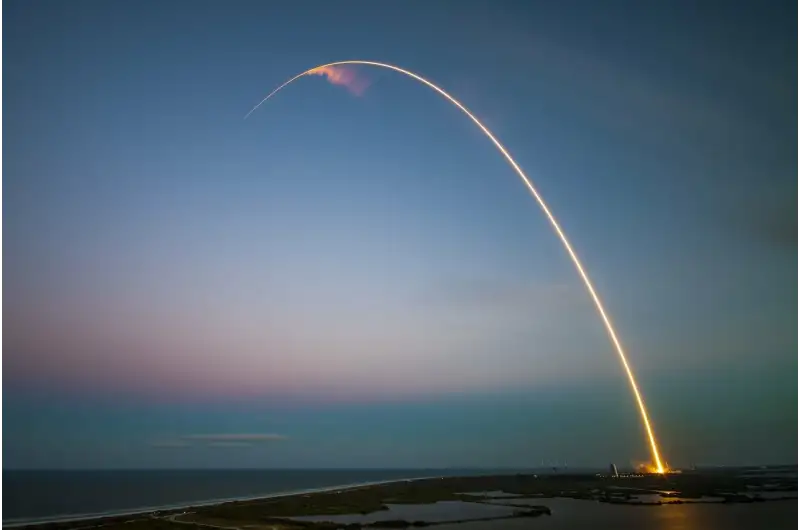
In the remote stretches of northern Norway, where icy winds whip across the Andøya archipelago, a sleek 28-meter rocket named Spectrum stood poised for liftoff on March 24, 2025. This test flight, the first for Munich-based startup Isar Aerospace, was intended to usher in a new era of European space independence. But despite anticipation across the continent, strong upper-level winds forced a last-minute delay. Still, the postponed launch has done little to dim the excitement surrounding this ambitious private venture—one that could redefine Europe’s role in the global space race.
Isar Aerospace, founded in 2018, is a commercial rocket company on a mission to fill a glaring gap in Europe’s launch capabilities. With over €400 million (around $435 million) in private funding, it has built the Spectrum rocket to serve the growing demand for small and medium-sized satellite launches—particularly for Earth observation, climate monitoring, and communications. Unlike the European Space Agency (ESA), which relies heavily on government funding and launches from French Guiana, Isar Aerospace is going lean, fast, and private. Its Spectrum rocket is fully developed in-house, including its Aquila engines and carbon composite frame, and aims to provide cost-effective access to polar and sun-synchronous orbits from within continental Europe.
Originally scheduled to lift off between 12:30 p.m. and 3:30 p.m. local time, the Spectrum test flight from Andøya was never meant to carry a commercial payload. Instead, the goal was purely experimental: to test the rocket’s integrated systems under real conditions. Even a 30-second burn, Isar’s team noted, would be a success if it delivered critical engineering data. In that sense, the launch was less about reaching orbit and more about reaching confidence—confidence in the rocket’s design, manufacturing process, and operational readiness.
The launch site itself is as strategic as the rocket it supports. Located above the Arctic Circle, Andøya Spaceport is uniquely suited for launching into polar and sun-synchronous orbits—ideal for the types of satellites that monitor Earth’s poles or require consistent daylight exposure. Isar Aerospace has secured exclusive use of a launch pad here for the next 20 years, signaling not just commitment to the site, but to a long-term vision of launching dozens of rockets each year. This geographic advantage also gives Europe a much-needed alternative to its existing reliance on foreign launch facilities.
Though Spectrum’s debut was delayed, the implications of its eventual success are massive. If the vehicle reaches orbit on a future attempt, it would mark the first time an orbital rocket has launched from continental Europe (excluding Russian sites), a milestone that could dramatically alter Europe’s space autonomy. With ESA’s Ariane 6 delayed and smaller missions often hitching rides on foreign rockets like SpaceX’s Falcon 9, Europe’s space access has become increasingly constrained. Spectrum could be the continent’s homegrown solution—an independent path to orbit that doesn’t rely on international partners.
The rocket’s targeted price point of €10,000 ($11,700) per kilogram could also help undercut the bottleneck of rideshare launches, where smaller payloads often take a backseat to larger missions. Isar Aerospace aims to launch up to 40 vehicles per year once Spectrum is fully operational, making space access quicker, cheaper, and more responsive—especially important for governments, universities, and climate researchers needing timely satellite deployment.
Despite the setback, CEO Daniel Metzler and his team remain optimistic. Two more Spectrum rockets are already in production, and the next test flight is expected soon. The delay at Andøya, while frustrating, is a common rite of passage in the space industry. The first test flights of rockets—even from giants like SpaceX—often come with delays, technical issues, and hard lessons. What matters more is the determination to keep iterating, improving, and moving forward.
As of now, Europe watches with anticipation. In a geopolitical climate where space capabilities are as much about strategy as science, Isar Aerospace represents more than just a startup. It’s a symbol of Europe’s push to reclaim its place among the spacefaring nations—on its own terms, with its own rockets, from its own soil.
When Spectrum does take flight—whether days or weeks from now—it will carry more than instruments or data. It will carry the hopes of a continent ready to chart a new course among the stars.