
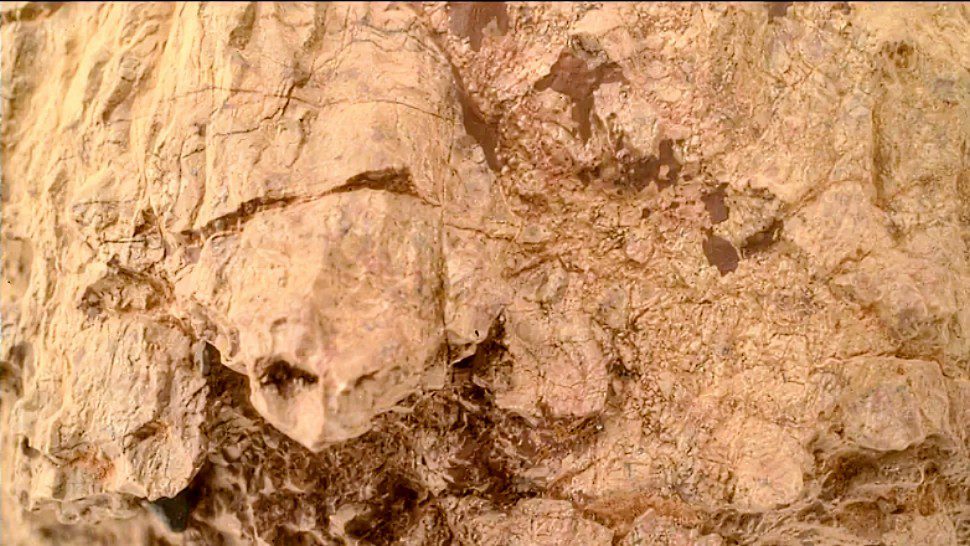
NASA’s Perseverance rover just delivered another surprise from its journey across Mars… a photograph of a bizarre “turtle” seemingly peeking from the ancient Jezero Crater. Despite Mars being a lifeless planet, this turtle is no living creature, but rather a striking natural rock formation sculpted over eons. What’s even more fascinating than the sight itself is our unshakable habit of finding such familiar shapes on a world so utterly alien. Why do we keep seeing animals and objects on Mars? The answer reveals as much about the human mind as it does about the Red Planet’s rugged surface.
Mars: A Playground for Human Imagination
Every time NASA releases new images from Perseverance, the global audience scans them with eager eyes, searching for hints of life or glimpses of the extraterrestrial. Among these images, rocks on Mars often mimic shapes like blueberries, skulls, doorways, mineral flowers, and now, a turtle. It’s tempting to imagine a turtle basking under a cold Martian sun, but these resemblances spark curiosity precisely because they challenge our expectations of what might exist on another world. For scientists, this habit is more than idle daydreaming; it helps keep interest alive while fostering a unique dialogue between public imagination and rigorous science.
The Science of Seeing Patterns
The root of this phenomenon lies in a quirk of psychology called pareidolia. Humans evolved to be exceptionally good at spotting patterns, especially faces and animals, even when they’re hidden among random shapes. It’s a survival trait that once helped ancestors detect threats or allies in shifting shadows and tangled woods. On Mars, with its lifeless deserts and rocky plains, pareidolia turns stones into turtles, helmets, “spiders,” or even the Star Trek insignia. Each pattern spotted is a story in itself, blending science with wonder and nourished by the rover’s steady stream of images.

Martian Rocks: Sculpted by Time and the Elements
How do Martian rocks acquire such improbable shapes? The answer traces back to ancient environmental forces. Jezero Crater… a twenty-eight-mile-wide depression where Perseverance roams.. was once flooded by water, which shaped the landscape before vanishing forever. After the lake disappeared, Mars’ relentless winds continued the work, sculpting stones with impressive precision. Over thousands or even millions of years, a single rock can be eroded into something resembling a turtle, a dog, or a flower.
Pareidolia and the Hunt for Life
Curiously, pareidolia isn’t just a source of amusement; it can teach us caution. The human tendency to find familiar shapes shapes how discoveries are interpreted, especially in the search for extraterrestrial life. Scientists train themselves to distinguish between genuine fossils or biosignatures and misleading visual artifacts. As NASA’s Perseverance continues to send home photographs, experts scrutinize each image with both analytical rigor and the knowledge that our brains might play tricks. In this way, pareidolia becomes a double-edged sword: fueling excitement, while also demanding careful skepticism.
Curiosity Across Two Worlds
The cycle continues.. Perseverance rolls on, uncovering new geological enigmas: a “skull,” a “helmet,” a “turtle.” Each discovery becomes a talking point across the globe, drawing students and scientists, artists and engineers into the ongoing exploration of Mars. These rocks, in their whimsical resemblance to Earthly life, remind us how curiosity bridges the gap between worlds. After all, it’s only human to wonder what lies just beyond the horizon.. and to look for a piece of ourselves, even on a rocky red planet.
What Will We Spot Next?
The turtle rock is just the latest in an ever-growing gallery. Perhaps next week Perseverance will uncover another fanciful shape.. a dragon’s tail, a flower in bloom, or something no one expects. Each photograph, each curious sighting, invites readers into the story of discovery and the playful mystery at the heart of space exploration. On Mars, the adventure continues, and pareidolia ensures that both minds and imaginations stay tuned for the next surprise.

