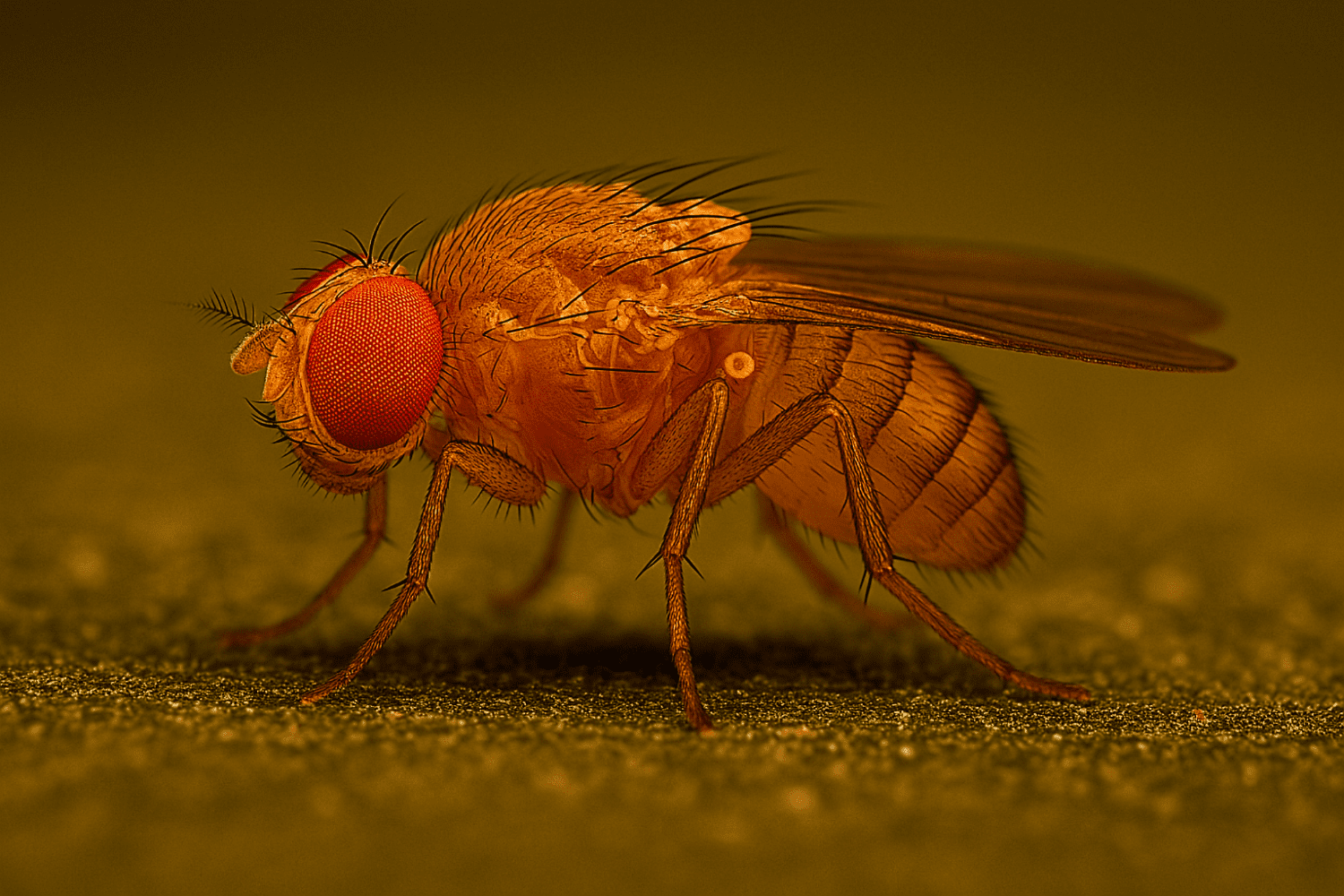
In the world of scientific exploration, few creatures have been as instrumental as the humble fruit fly, Drosophila melanogaster. Renowned for its contributions to genetics and developmental biology, this tiny insect has once again stunned researchers with a groundbreaking discovery: its larvae can sense electric fields. This remarkable finding, recently reported by Phys.org, comes from a detailed study conducted by researchers at UC Santa Barbara, revealing a form of electroreception never before seen in such a simple organism.
The journey to this revelation spanned over 15 years, during which scientists meticulously investigated how fruit fly larvae respond to various environmental stimuli. The challenge was distinguishing whether the larvae were reacting to actual electric fields or to secondary effects like current, pH shifts, or heat. Using precise experimental conditions, the researchers ultimately demonstrated that the larvae exhibit a clear behavioral preference for negative electric fields. This behavior remained consistent even after accounting for all possible alternative explanations, firmly establishing the presence of a true electroreceptive sense.
To understand the biology behind this phenomenon, the team turned to advanced genetic and imaging tools. They identified a specific cluster of neurons in the larvae’s head that activate in response to electric fields. These neurons are located near known chemosensory regions, suggesting a complex integration of sensory inputs. Unlike electroreception in fish or amphibians, which involves specialized sensory organs, the fruit fly larvae seem to use a more direct and perhaps primitive neural mechanism. This makes their system uniquely suited for genetic and molecular dissection.
The discovery raises fascinating questions about the purpose of this ability. One hypothesis suggests that electroreception might help larvae navigate through their natural habitat, which often includes decaying fruit rich in microbial life and chemical gradients. Alternatively, it might serve as an evolutionary defense mechanism, allowing larvae to detect and avoid parasitoid wasps, a common threat.

Beyond its biological significance, this discovery opens new doors in neuroscience and bioengineering. Since Drosophila is a genetically tractable model, researchers can now probe the genetic basis of electroreception with unparalleled precision. The UC Santa Barbara team envisions future applications akin to optogenetics, where electric fields could be used to manipulate neural activity or gene expression remotely. Such innovations could revolutionize fields ranging from neural prosthetics to targeted gene therapies.
Ultimately, what began as a simple behavioral observation has blossomed into a profound insight into sensory evolution. The ability of fruit fly larvae to detect electric fields adds another layer to our understanding of how organisms interact with their environment. It serves as a reminder that even the most familiar model organisms can still hold surprising secrets, waiting to be discovered through patience, curiosity, and the relentless pursuit of knowledge.